Implementation
7 KPIs that every company should track in the system
Business management is impossible without clear and measurable indicators. Many entrepreneurs make decisions intuitively, but it is the numbers that show the real state of affairs: what works, what needs improvement, where money or clients are being lost, and what brings the greatest results.
A CRM system helps not just to collect data, but to turn it into analytics that impact profit. Below are 7 key KPIs that every company should track, and simple examples of how this looks in practice.
1. Average Ticket
Why you need it: Shows the average sales amount. If the average ticket grows, the business becomes more profitable without increasing the number of clients.
Formula: Sales volume / number of deals.
How to track in CRM using the Keruj example: In reporting, the service automatically calculates the total sales volume and the number of successful deals for the period.
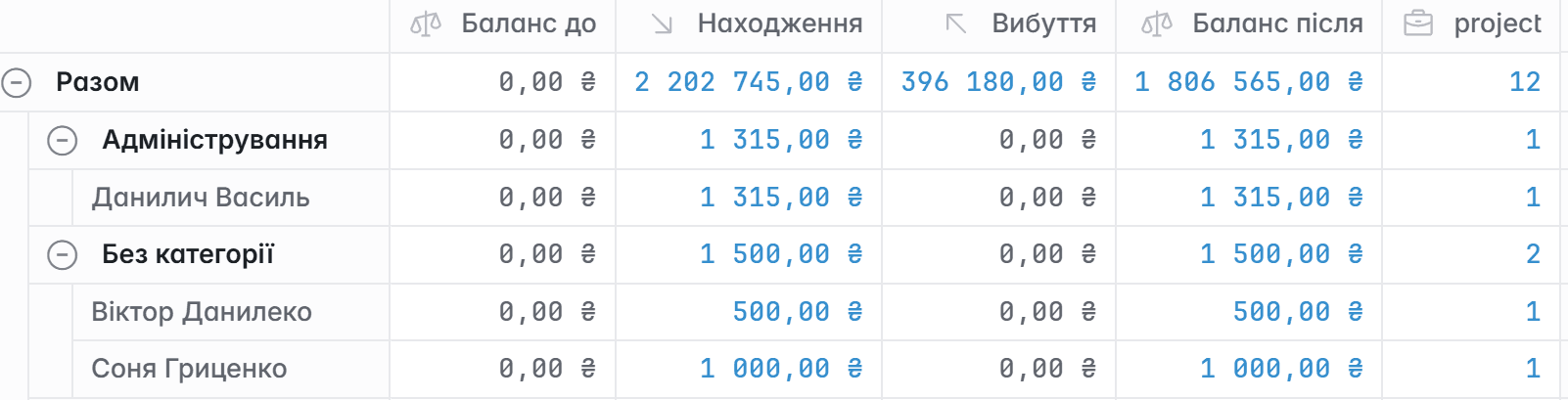
The company provides services. Over a month, they closed 28 orders worth 396,180 UAH.
Average ticket = 396,180 / 28 = 14,150 UAH.
The manager sees that representatives only sell basic services – and introduces additional packages to increase the average ticket by 10-20%

2. Number of New Leads (Inquiries)
Why you need it: This is an indicator of marketing health and the sales pipeline. If there are few new inquiries, sales will drop in 1-2 months.
How to track in Keruj:
In the "Opportunities" module, you can view all inquiries: from the website, phone, messengers, email. According to the creation date, you can analyze how many inquiries were received per day/week/month, or set up your own report that will calculate this information for you automatically.
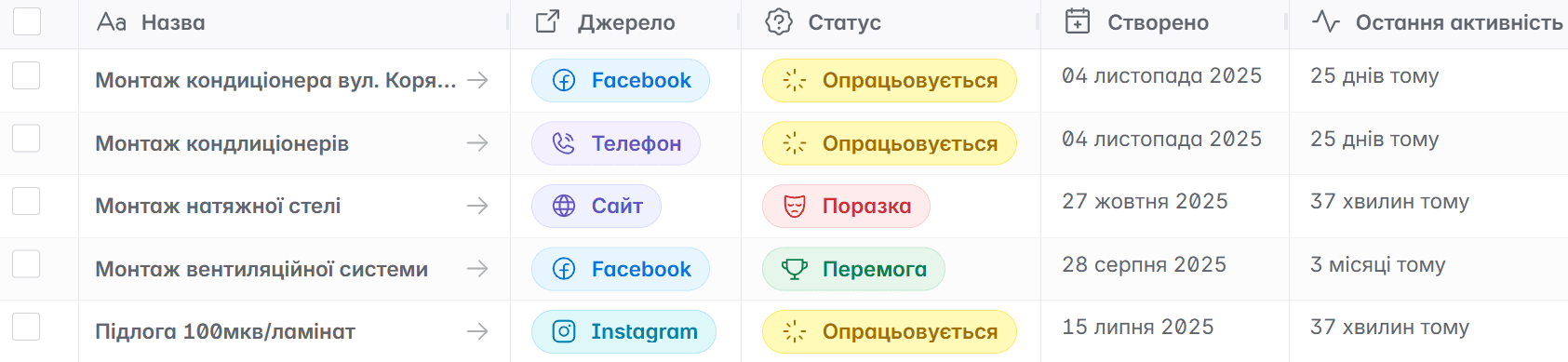
The company used to get an average of 100 inquiries per month. Due to a seasonal dip, they got 60. Managers started "simply selling less". Analytics highlighted the problem in advance – and the company launched a new advertising campaign in time or designed a new incentive system for managers.
Why you need it: Shows how effectively the sales department processes inquiries.
Formula: (Number of successful deals / number of received inquiries) × 100%
How to track in CRM: By analyzing successful and unsuccessful opportunities, you can see at which stage customers drop out.
The company sees in the service:
- "In progress" had 40 opportunities
- completed with the status "Won" - 8
Conversion - 20%.
The manager sees a failure at the "Commercial Proposal" stage – representatives do not call back on time.Solution: They introduce mandatory task creation with reminders – conversion grows to 27%
Why you need it: If the company is slow to respond, the customer goes to a competitor. In many industries, speed = sale.
How to track in CRM: In the record details, data about the inquiry receipt and the last activity is automatically saved.
5. Sales Representative Effectiveness
Why you need it: In B2B, it is important to understand not only the final sales result but also how the representative works in the process: whether they accumulate unprocessed inquiries, bring opportunities to completion, or "lose" clients at the negotiation stage.
In Keruj, it is convenient to monitor:
how many new inquiries are assigned to a representative
how many they have processed
how many opportunities they brought to completion (successful or failed)
how many inquiries are still "hanging" without change
at which stages inquiries most often stop
How to track: In the "Opportunities" module, you can see the number of inquiries in progress, their status, the history of the representative's actions, and intermediate results.
In reports – who works more actively, completing more inquiries, and who misses or delays processing.
6. Accounts Receivable
Why you need it: Even with good sales, a business can "fall" into a cash flow gap if customers do not pay on time.
What needs to be monitored:
debt amount
overdue payments
largest debtors
which representatives work with problematic contracts
How to track in Keruj:
In financial reports you can see: which invoices are unpaid, for what amount, and how many days overdue they are.
The report shows:
- Customer debt LLC "Standard Comfort - Rivne" - 50,800 UAH
The representative receives a task to remind the customer. Without systematization, the numbers were "in the head" or written down somewhere in spreadsheets – and losses were constantly accumulating

7. Profitability of Products or Services
Why you need it: Not all products are equally profitable. Some are sold often but bring a low margin. Others are sold rarely but are highly profitable.
It is important to understand:
which products earn the most
which products are better to promote
what should be removed from the range
How to track:
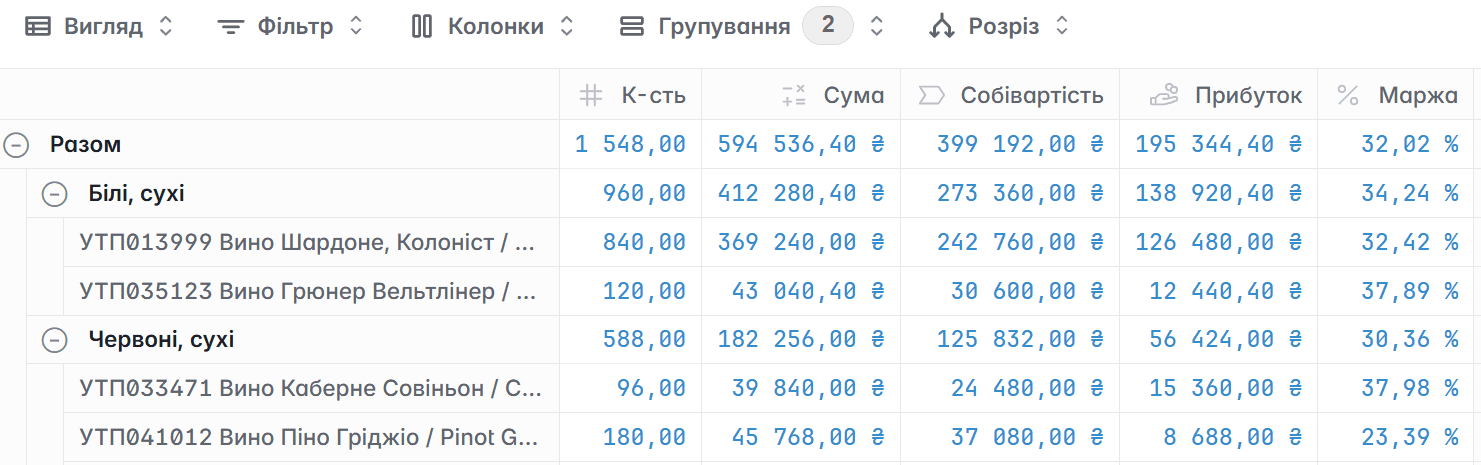
Analytics takes into account cost price, margin, and sales results. Reports show the profitability of products and services.
A company sells a wide selection of wines
The report showed: During the specified period, sales of white wine are significantly higher than red wine
By analyzing sales, the company can find out the reasons for low sales of items; perhaps they should be replaced or promotional offers should be made to buyers to increase sales.
KPIs are not just numbers. It is a business management system that allows you to:
see the real state of affairs
forecast results
monitor the work of representatives
quickly react to problems
identify growth points
make data-driven decisions
Systematization makes this simple: it gathers information automatically, updates numbers in real-time, and shows where the company is losing opportunities and where it is growing.
Companies that work with KPIs daily always outpace those who "just sell". This is not about bureaucracy – it is about management that brings stability, order, and financial results.