Finance
Why keeping financial accounts in spreadsheets is a risk for the company
At the beginning of business development, spreadsheets seem like the perfect solution. Convenient, free, easy to understand. Everything is at hand - income, expenses, balances, reports. But over time, it is the spreadsheets that start to cause more problems than benefits. And what seemed like a simple tool turns into the main risk for the company.
The human factor: a mistake that costs money
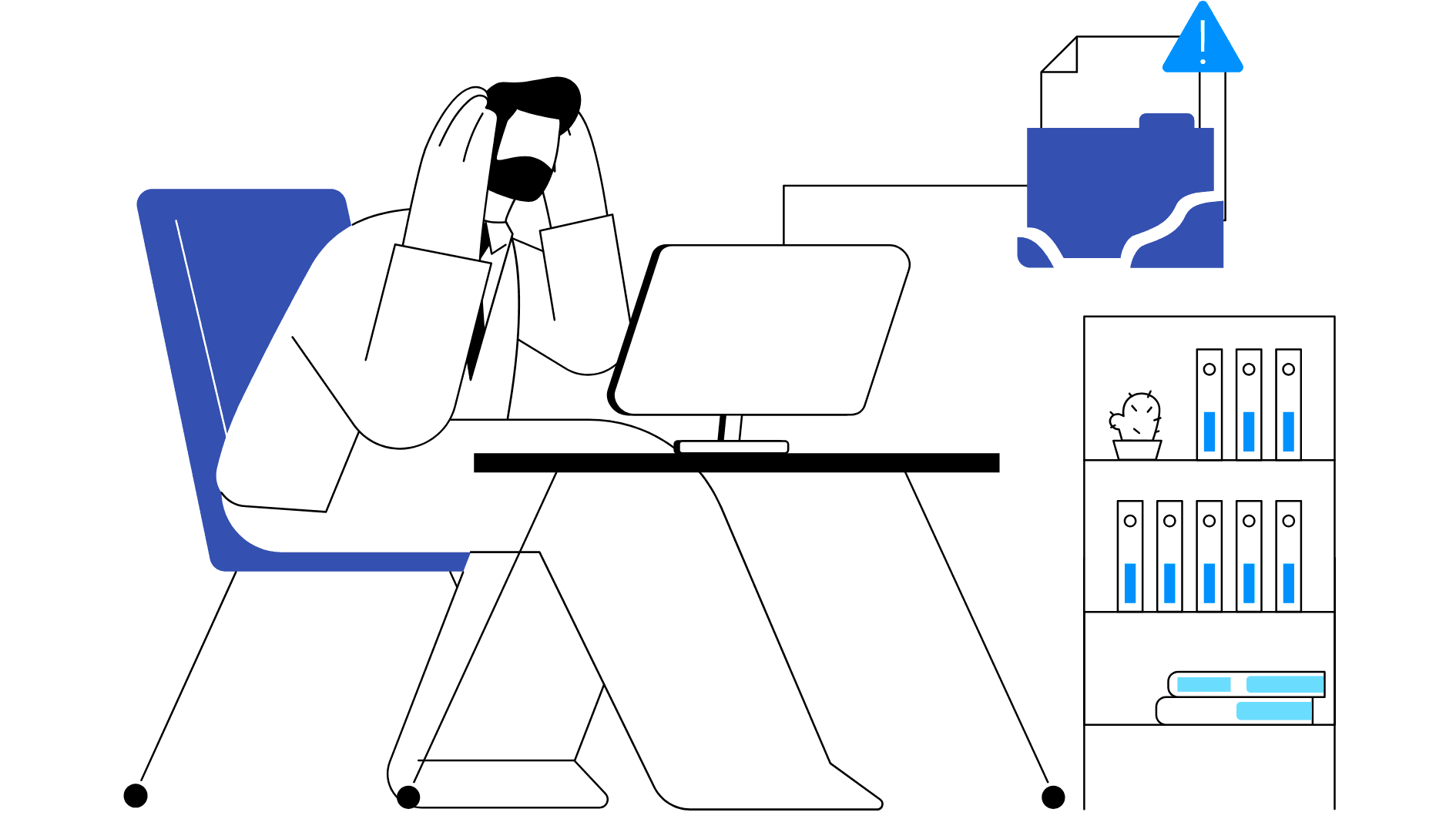
In spreadsheets, everything relies on manual data entry. You only need to mix up a cell or delete a formula - and the financial reporting becomes incorrect. Such mistakes are often not noticed immediately, but only after wrong decisions have already been made.
Even an experienced accountant or financial manager is not immune to inaccuracies, especially as data volumes grow. The result is confusion, incorrect profit on paper, and real financial losses.
Lack of a single source of truth
When financial accounting is kept in several spreadsheets, programs, or even in different files on employees' computers, it is difficult to understand where the up-to-date information is.
Someone updated the data yesterday, someone a week ago, and someone is working with a copy of an old version altogether. As a result, the manager sees not a complete picture, but a "composite puzzle" of inaccuracies.
In Keruj, all financial data is stored centrally - in one place, with a clear history of changes. You always see up-to-date numbers, who updated them and when, and you can trust the data.
No connection to real processes
Spreadsheets show only numbers, but do not reflect real business processes. You do not see where this or that income came from, from which deal or from which client the payment was received. Without integration with documents, sales, or expenses, the spreadsheet remains only a part of the picture. This complicates analysis and makes it impossible to understand which directions are truly profitable.
In Keruj, finances are linked to all modules: sales, projects, counterparties, nomenclature, warehouse. You see not just a number in a report, but its real source.
Hard to scale
While there are few operations, spreadsheets work. But as soon as the business grows, they become a bottleneck. Each new deal, employee, or invoice increases the amount of data, and the spreadsheet begins to "break": it freezes, loses formulas. At this stage, the company either spends resources on "patching" spreadsheets or is forced to urgently switch to systematic accounting - already under stress.
Making this transition on time can prevent chaos and build a reliable financial foundation.
No transparency and control
Spreadsheets do not record who changed the data and when. This creates risks - both for internal control and for the company's security. Unnoticeably, figures can be changed, records deleted, or a file accidentally corrupted.
In Keruj, every change is recorded. You see the history of changes made, and access to data can be restricted by roles. This creates transparency and accountability in the team.
Lack of analytics
The main problem with spreadsheets is that they show only facts but do not provide an understanding of trends. To create a report, you have to manually analyze all the data entered in the spreadsheet. This takes hours of time.
Keruj generates reports automatically: income, expenses, profit, cash flow, debt. The manager sees the real picture of the business - daily, without waiting and manual work.
Why you should switch from spreadsheets to Keruj
Switching to systematic accounting is not just a "change of tool", but a step towards stability.
Instead of dozens of files and copies, you get a single structure that combines finance, sales, documents, and counterparties.
Instead of the constant fear of "having calculated something wrong" - confidence in the data and peace of mind about the result.
Keruj is designed precisely so that the owner can see the company's financial picture without chaos, errors, and manual work!
You control not only the numbers, but also the process itself - from order to result. Therefore, financial accounting stops being a risk and becomes your main management tool.