Implementation
Why communication within Keruj is more important than chats in messengers
Business thrives on communications. The more clients, projects, and tasks there are, the more crucial it is for information to be accessible to everyone involved in the process. Most teams are used to discussing work in personal messengers - this seems fast and convenient. But when you need to find a file, clarify a promise to a client, or recall a detail discussed a week ago, problems begin.
In Keruj, communication is integrated directly into workflows: in tasks, opportunities, and client interaction history. This means that discussions do not live a separate life - they become part of systemic work.
No information gets lost
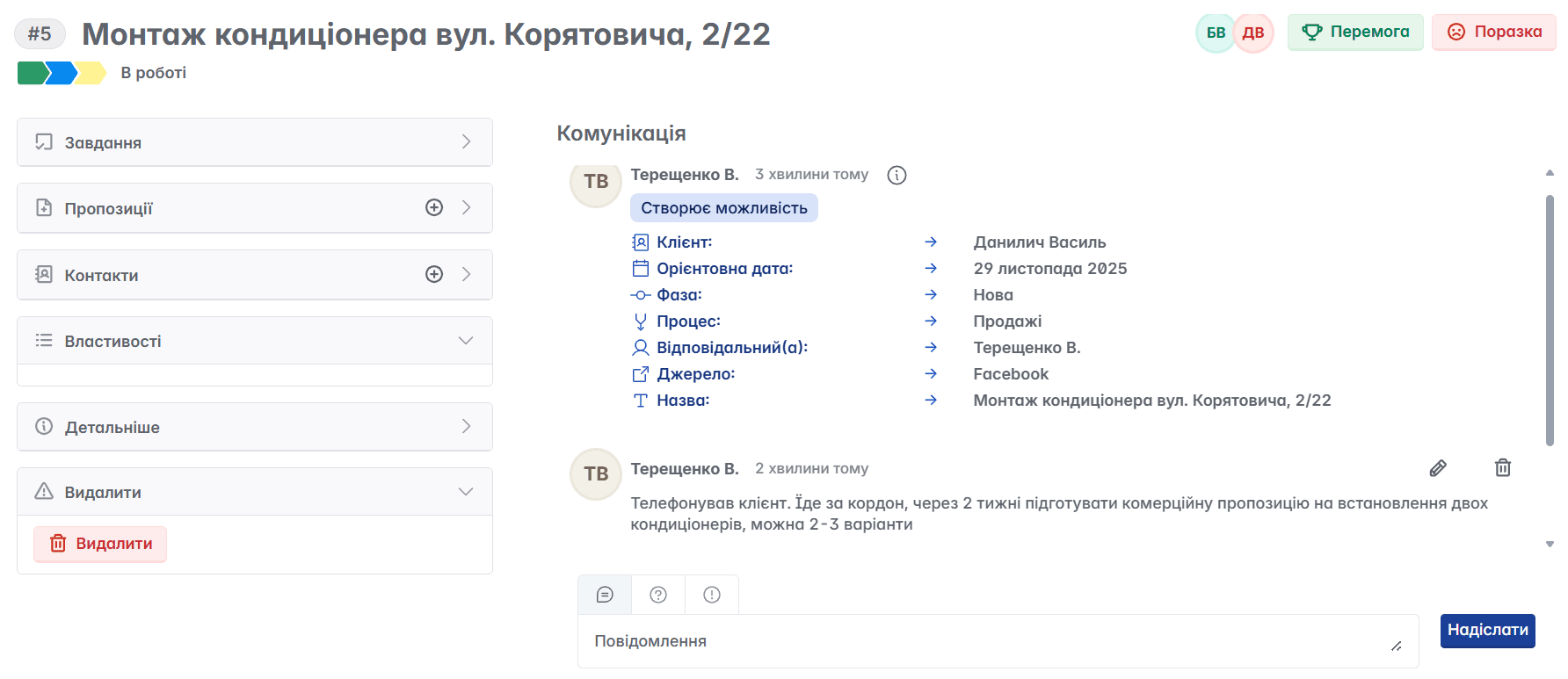
In a messenger, messages are easily "drowned" in a stream of new topics. After a few days, finding an important detail or document is almost impossible. In Keruj, every communication is saved within context - all comments are linked to a specific task or client. You simply open the required object and see the complete history of decisions and agreements. This is especially important where deadlines and responsibility matter.
Example: tech support left a comment in an opportunity, thanks to which the manager is able to perform the work qualitatively - and the client gets the result without extra calls or searching for context.
Transparent accountability
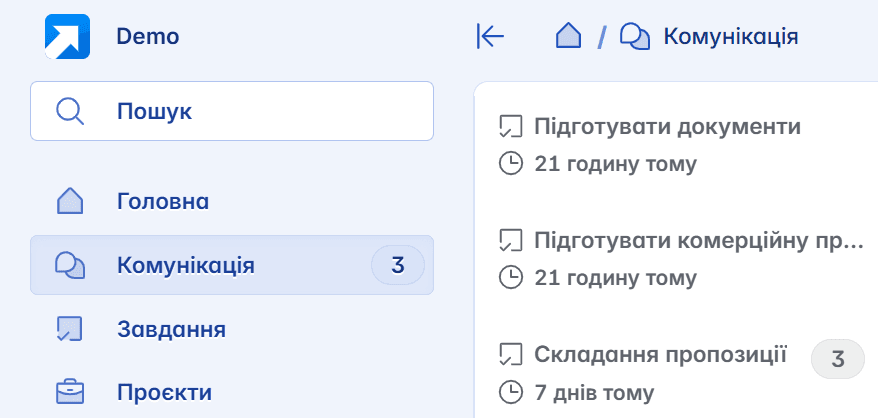
In personal chats, situations often arise: "I didn't see the message", "It wasn't for me", "I thought someone else would do it". In Keruj, assigning responsible persons in tasks creates a clear understanding: who, when, and what needs to be done. No one can say they did not know or see the information - it is stored right where the work happens.
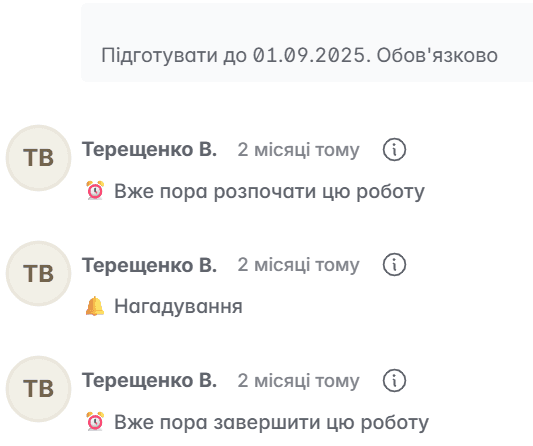
And reminders inside the tasks will help not to forget anything and get the work done on time.
The manager does not need dozens of follow-ups
Instead of constantly asking about statuses in messengers, the manager can open a task or opportunity at any moment and see the entire progress history: what comments there are, who stopped where, what is done, and what is waiting for approval. This eliminates micro-management and allows controlling the real situation without stressing the team.
A newcomer in the team gets onboarded easily
In messengers, when a new employee arrives, you have to forward parts of chats or explain from scratch what occurred earlier. In Keruj, it is enough to add the person to the task or project - they immediately see all the context: attached documents, deadlines, previous discussions, and decisions. This significantly speeds up onboarding and saves the team's time.
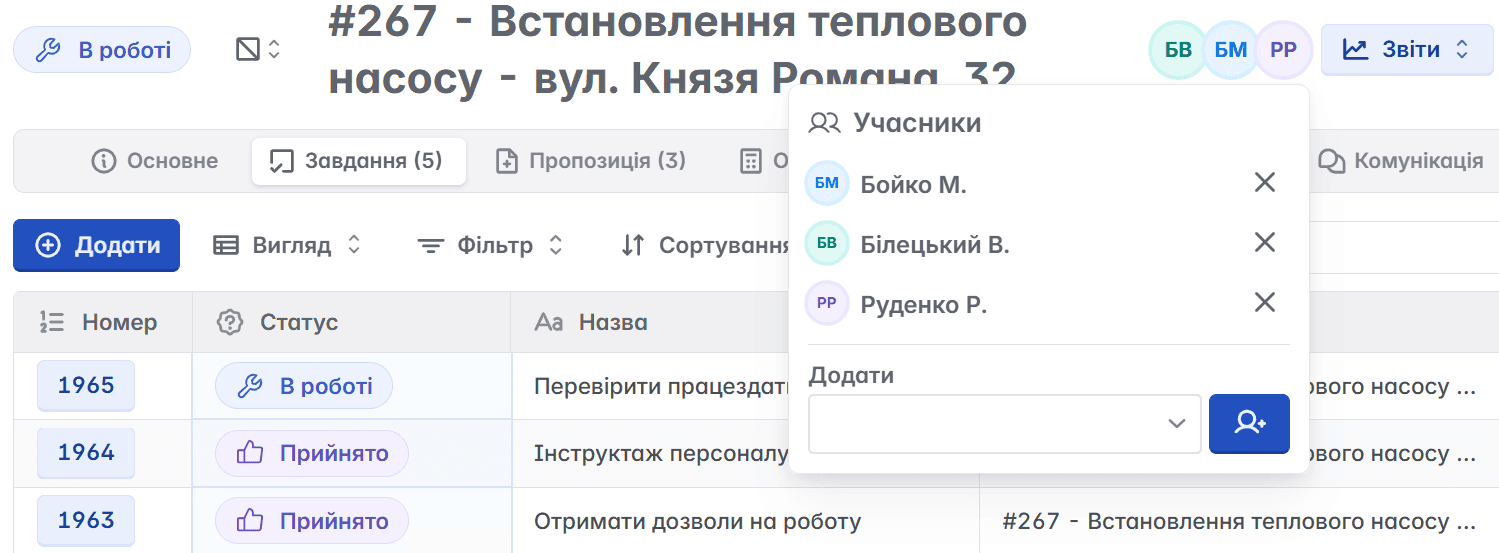
Client communication - controlled and preserved
In Keruj, you can record all interaction with the client: notes, comments, tasks, and call details. If a manager gets sick or goes on vacation - another specialist takes over the work seamlessly. The client does not experience chaos because the company does not depend on the personal chats of a single employee.
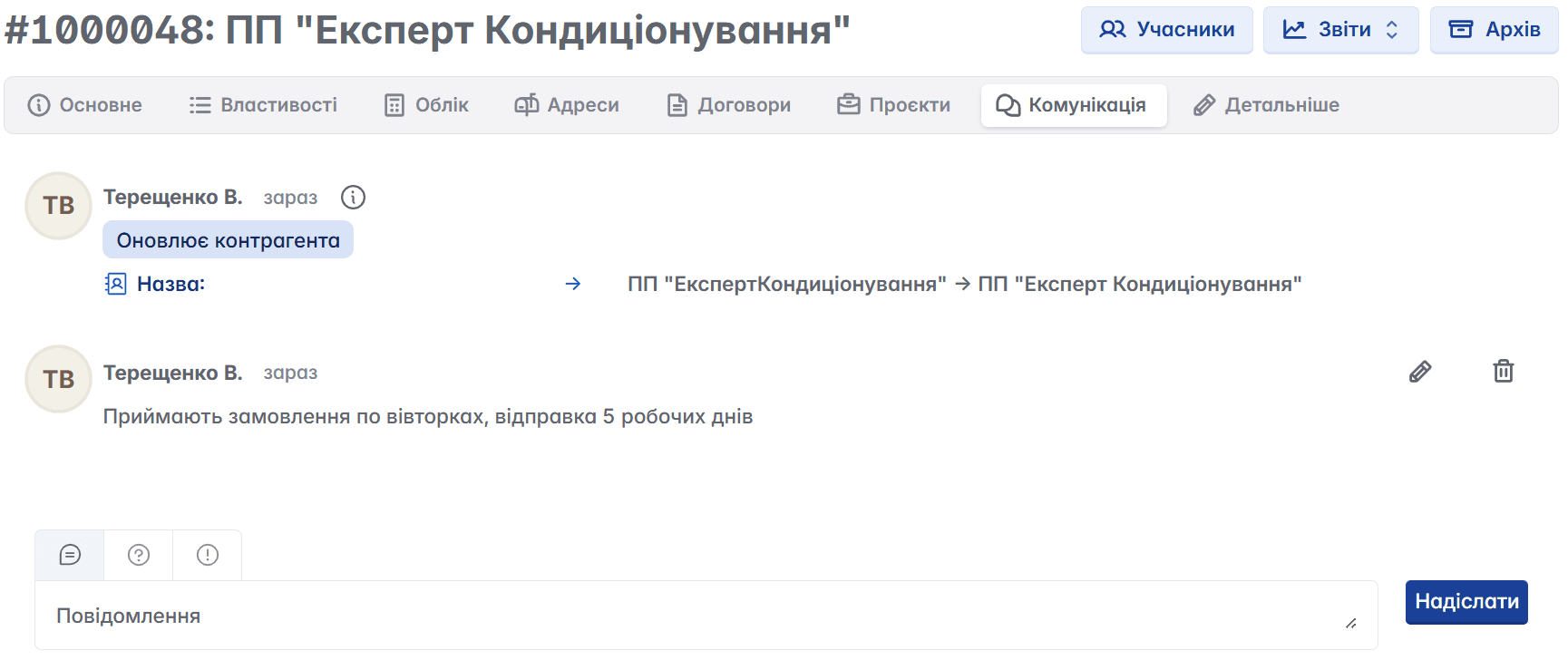
Business data security is a priority
In messengers, work chats remain on employees' personal devices. If a person resigns, a portion of the business history leaves with them. In the CRM, access is managed centrally, data is kept in the company, and every action has a change history. This is important for startups and especially critical for scaling companies.
Communication where the work is - that's efficiency
Communication within the environment helps not only to preserve information - it keeps tasks moving forward. A comment can influence a status change, the creation of a new task, or notify the responsible person about the request processing state. Nothing like this can be implemented in messengers.
Communication should be part of the workflow, not a chaotic addition on the side. When all discussions are conducted in Keruj, the team works faster, more accurately, and more transparently. There is no duplication, confusion, or lost information - only a clear path from task to result.


