Finance
Financial statements: which metrics a business owner should control
A successful business is not only about attracting customers and growing, but also about understanding how cash flows are actually distributed, how much you earn, how much you spend, and what financial buffer you have. For a company owner, it is important not just to "see the accounts," but to systematically monitor key financial indicators in order to make informed decisions - when to invest, when to hold back, and when to scale up.
Key financial indicators to control
Here are some basic but extremely important financial metrics to pay attention to:
Cash flow
This is an indicator of all cash inflows and outflows over a certain period. If money "goes out" faster than it "comes in," it can create a crisis even when the business seems profitable. Monitoring cash flow allows you to forecast cash shortages, plan reserves, or credit lines.
Profit and expenses (P&L, Profit & Loss)
Here we look at how much money the company actually earned after considering all expenses - for procurement, labor, taxes, etc. This is the "net" result of activities. Knowing these figures helps evaluate business profitability and adjust strategy if costs are rising.
Financial position (account balances)
It is important to see how much money is "lying" in bank accounts, cash registers, how much money is blocked or reserved, and what inflows are still expected. This gives an understanding of liquidity - how quickly a business can mobilize resources if the need arises.
Financial forecast
It is equally important to have an idea of future inflows and expenses. For example, to understand that certain counterparties have not paid yet, or that large expenses are planned in the coming month. Such a forecast helps to avoid "unpleasant surprises."
How to track these indicators in Keruj
In Keruj, there is everything necessary for a business owner to easily control finances - without Excel, paper reports, or chaos in documents. The Reports section is the place where key financial metrics are concentrated.
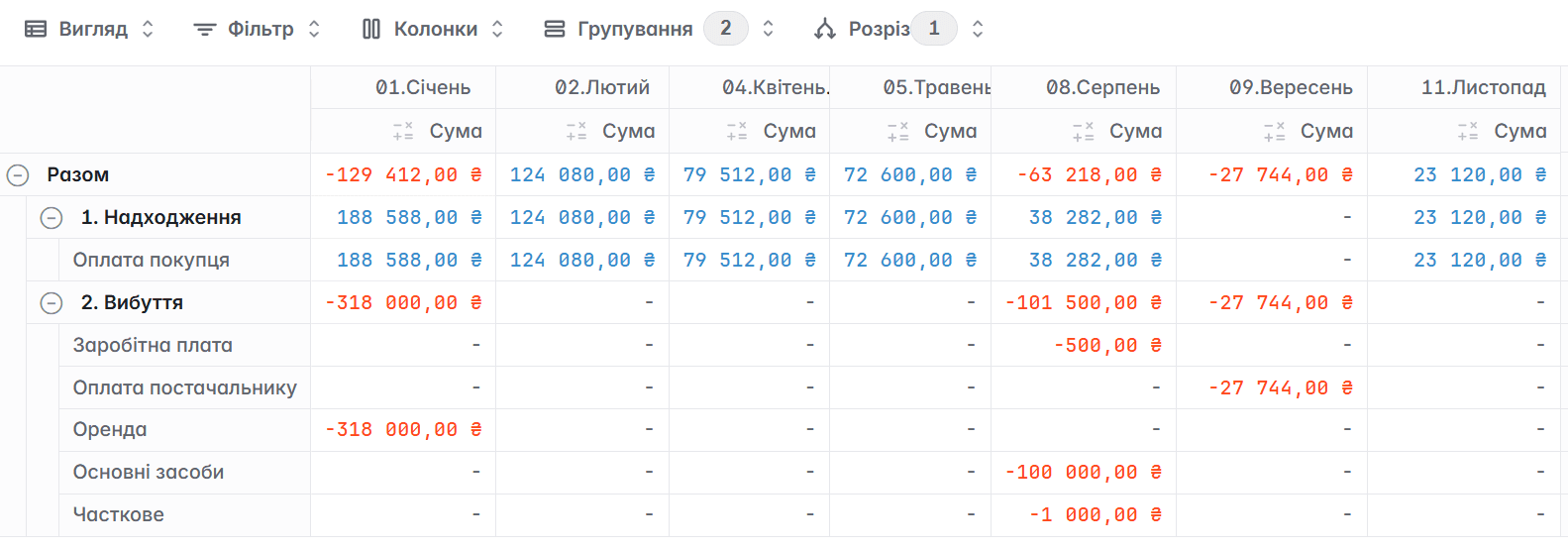
The "Cash Flow" report shows all inflows and outflows of funds, broken down by category and time period - day, week, month. This gives a visual understanding of when money is "pouring in" and when it is "flowing out"
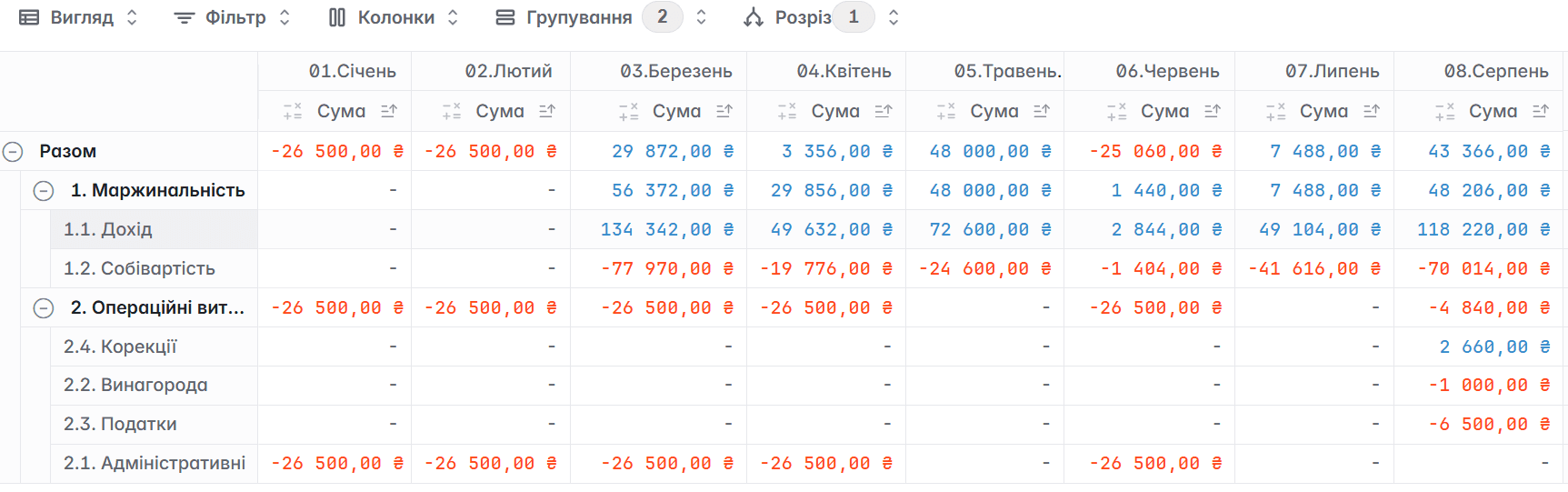
The "Profit and Loss" (P&L) report shows how much net profit you made. It takes into account income, expenses, taxes, and other liabilities
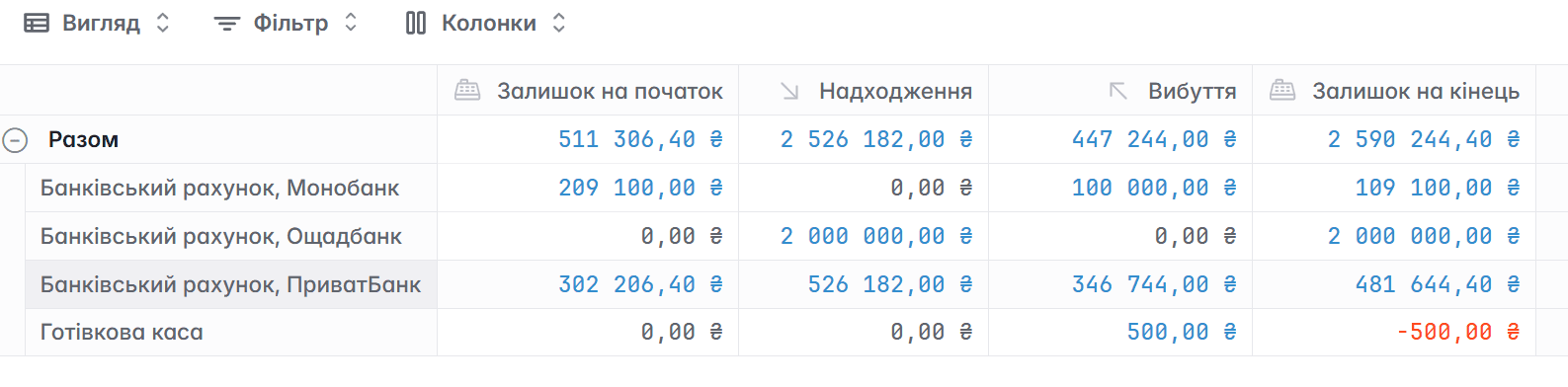
The financial report in Keruj shows account balances: cash register balances, bank accounts, reserved funds, and expected transactions
Each report has a toolbar: you can switch between periods (days, weeks, months), add the necessary filters and columns, export data to CSV, or print the report.

In addition to the 7 standard types, you can create your own custom report in Keruj - to make it match your business needs as much as possible. This is especially useful if your business has specific financial metrics that are not covered by the basic reports.
Why is this important for the owner?
Decision-making based on real data. Instead of a "feeling," you have numbers: how much money is actually in the account, which expenses are growing, and whether there is a "safety cushion."
Timely response. If cash flow starts "going into the negative" or a decrease is observed in accounts - you notice this immediately and can take action.
Planning and strategy. With a forecast of future expenses and inflows, it is easier to plan investments, hiring, procurement, or cost containment.
Financial transparency. The business owner can always look up the financial status - without having to wait for a bookkeeping report at the end of the month.
Financial control is not just "accounting routine," it is a strategic tool for growth. Monitoring cash flow, income-expenses, account balances, and forecasts gives the business owner the key to confident decisions. And with Keruj, you have a convenient and transparent tool for keeping such reports - simply, accurately, and automatically.


