Implementation
Ready-made solution or development of your own ERP system. Advantages, disadvantages, and pitfalls
When a company decides to implement a management system, the first question facing the leader is whether to develop their own platform from scratch or use a ready-made solution. At first glance, custom development seems to offer more flexibility: you can take into account all the specifics of the business, build processes "for yourself," and avoid depending on third-party services. But in reality, it is not that simple – and the choice between these two paths determines not only operational efficiency but also the financial stability of the company for years to come.
Both options have their pros and cons. Let's break them down, highlight the risks, and provide practical guidelines for when custom development actually makes sense.
Ready-made solution
Advantages
Fast launch. A ready-made product can be implemented in a few days or weeks rather than years
Lower startup costs. A license for one user, for example, costs - $10/month
Support and updates are included in the price of the license. The developer constantly improves the product, fixes bugs, and adds new features mostly free of charge
Proven features. The basic logic of business processes has already been refined across hundreds of companies - this reduces the risk of rework
Ready infrastructure. Security, backup, and scaling are already taken care of by the developer
Disadvantages
Limited flexibility: sometimes it is difficult to customize everything "for yourself"
You may need to adapt business processes to the capabilities of the product
Dependency on the developer: if the platform stops developing or changes its terms, the business will also suffer (but usually such situations are provided for in the contract, and the user always has time to adapt)
Custom development
Advantages
Complete customization to unique business processes
Control over all code and features
No licenses or third-party contractors after launch
Disadvantages and risks
High cost. For example, if one developer costs $3,000/month (which is not surprising for a Middle or Senior level), and you need at least 3 such specialists for an adequate workload - that's $9,000 per month just for salaries
Infrastructure is also an expense. A server, backups, scaling, and security are needed - all of this falls on the company's shoulders (the price of the cloud issue is about $3,000/year)
The payback period can be very long. Development will pay off only if the company has a very large user base and the scale is very significant (we will provide a payback calculation below)
Complexity of support. It is necessary to maintain a development team, update code, fix bugs, and adapt to changes in business and legislation
Risk of getting "stuck" in the project. Often, companies launch their own platform but remain at 50-70% of features, and the business continues to work in old Excel sheets
Example of payback calculation
For a ready-made solution
License per user of the ready-made solution - $10/month
You have 10 users - $100 per month
Per year - $1200, and you can definitely get a discount for an annual license
For custom development
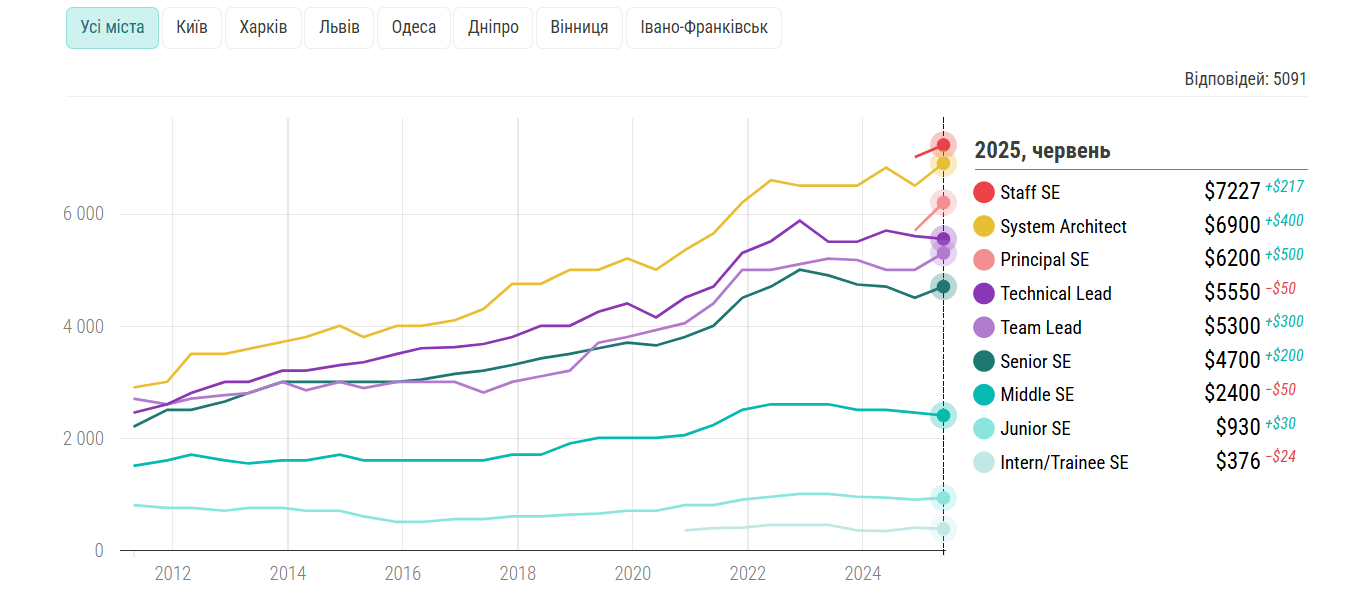
For a correct calculation, we used data from the article "Salaries of Ukrainian developers - summer 2025" published on the dou.ua forum. The author of the article refers to data from the CSV posted on GitHub. All salaries are indicated in US dollars after taxes ("net")
So,
The cost of one developer is $3,000/month (the average figure between Middle and Senior)
Three developers - $9,000/month, or $108,000/year
Additionally, infrastructure, servers, security, and increased utility costs - let's say, another $300/month = $3,600/year
Therefore, custom development: $108,000 + $3,600 = $111,600/year
Ready-made option: ~ $ 111,600/year
And all this is on the condition that you manage to hire experienced developers who already had some experience in building ERP systems.
To "break even" on developing your own platform with such a difference, you either need tens of times more users or to extract super profits that would justify these risks. These calculations illustrate that custom development makes sense only with large scale and a large number of users, where the licensing model becomes less profitable.
Comparison table: ready-made solution vs custom development
Criterion | Ready-made solution | Custom development |
|---|---|---|
Launch time | A few days/weeks | A few months/year |
Costs | Licenses/setup | Salaries/infrastructure |
Support | Developer's team | In-house team |
Flexibility | Limited but stable | Complete, but significantly more expensive in ongoing improvements |
Risk of delayed launch | Low | High |
Payback | From the first year | Absent without large scales |
Scaling | Easy, in some cases additional costs are possible for new features developed specifically for the client | Difficult, additional costs for developers are possible |
Many companies face "Excel syndrome" and try to rewrite spreadsheets into code. In reality, it is more efficient to take a ready-made platform and adapt the business to its strong suits.
Ready-made management solutions have long ceased to be "foreign" or "one-size-fits-all." Modern platforms, such as Keruj™, combine experience, flexibility, and speed of implementation. They allow focusing on business development rather than technical details.
Custom development is an ambitious, but expensive and long path. For most companies, it is a risk rather than an investment. Therefore, before building your system from scratch, it is worth answering a simple question: is it profitable to spend a year and tens of thousands of dollars on something that is already working today?


