Implementation

Employee workload: how to see who is overloaded and who is underloaded
For most teams, the workload issue looks the same: some employees are constantly "burning out" in tasks, while others have time but are not fully engaged. At the same time, the manager often does not see the full picture and relies on feelings rather than facts.
As a result, delays, overwork of part of the team, and inefficient use of resources occur.
To avoid this, you need more transparency, not more control. That is exactly what CRM provides.
Why it is difficult to estimate workload without a system
Without a single environment, tasks are distributed unevenly. Part of the work is recorded in the system, part in chats or verbally. Deadlines may be known only to the assignee, and the real volume of tasks is completely non-obvious.
In such a situation, the manager sees only fragments:
some are often busy, some reply quickly, some are rarely involved in work.
But this does not answer the main question — who is actually overloaded, and who has a reserve.
How Keruj™ shows the real picture
In Keruj™, workload stops being a subjective feeling. It becomes measurable.
The user's home page already provides a basic understanding of the situation: you can see the total number of tasks and projects, their statuses, and distribution among assignees. This allows you to quickly assess where an imbalance is occurring.
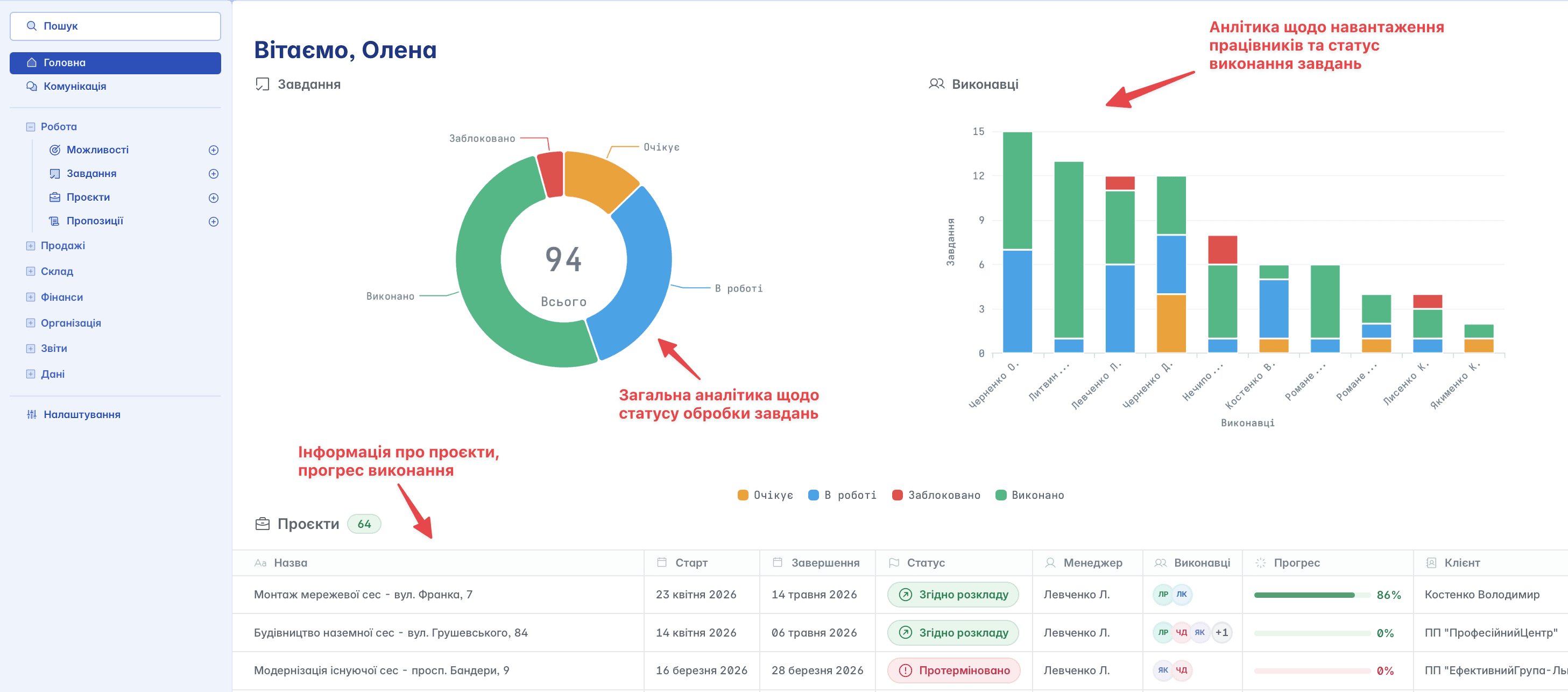
If one employee has a significant number of tasks "in progress" or "blocked", and another has only a few active tasks, it is a signal to review the distribution.
Importantly, this information is always up-to-date, as all work is carried out in the system.
Signs of overload and underload
Keruj™ allows you to see not only the number of tasks or projects but also their processing status. This is exactly what provides a proper understanding of the workload.
Signs of overload usually look like this:
a large number of tasks in the "in progress" status
the presence of overdue tasks or delays
accumulation of tasks without movement
Underload manifests itself differently:
a small number of active tasks
quick closing without new assignments
absence of tasks with a medium or long execution cycle
It is important to evaluate these signals together, not separately. For example, a large number of tasks does not always mean overload if they are short and closed quickly.
Balancing the workload in progress
When there is a transparent picture, the manager can make informed decisions.
In Keruj™, this happens without unnecessary actions. Through tasks and projects, it is easy to see who is already fully occupied and who can take on additional work.
Work redistribution becomes part of the process, rather than a reaction to a problem.
This is especially important in project work where the workload changes constantly. Without a system, these changes are difficult to track, but with Keruj™, they are visible immediately.
Control without pressure
One of the key advantages of Keruj™ is the ability to control workload without micromanagement.
The manager does not need to ask each employee about the state of affairs. All information is already in the system: statuses, deadlines, assignees, progress.
This reduces the amount of redundant communication and allows focusing on management rather than gathering information.
This is also more comfortable for the team. Expectations are clear, work is recorded, priorities are set.
How deadlines affect workload
Workload is not only about the amount of work, but also about the time for its execution.
In Keruj™, every task has a deadline, allowing you to see not just the volume of work, but its density over time.
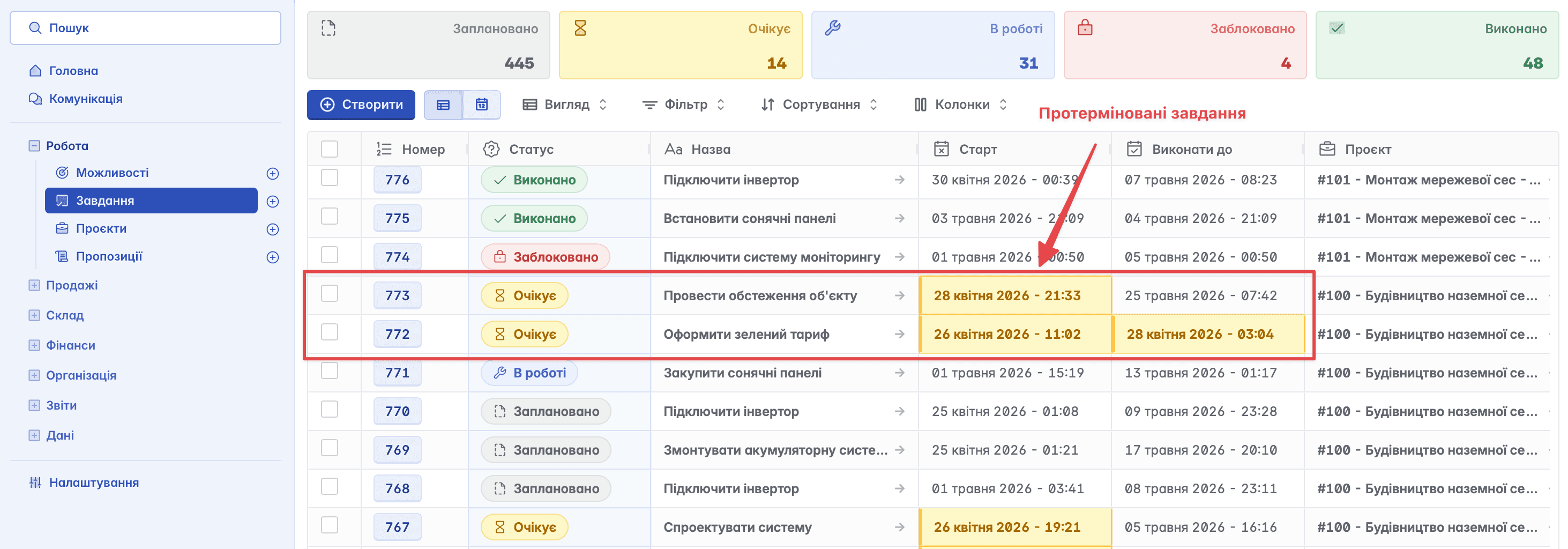
For example, an employee may have a few tasks, but all with short deadlines — and this creates an overload. At the same time, another may have more tasks, but with spread deadlines, making the workload comfortable.
That is why it is important to look at the workload comprehensively.
The role of projects in work distribution
Projects in Keruj™ allow seeing the workload not only at the task level but also within large works.
When all tasks are grouped in a project, it becomes clear:
who is involved, what stage the work is at, and where delays occur.
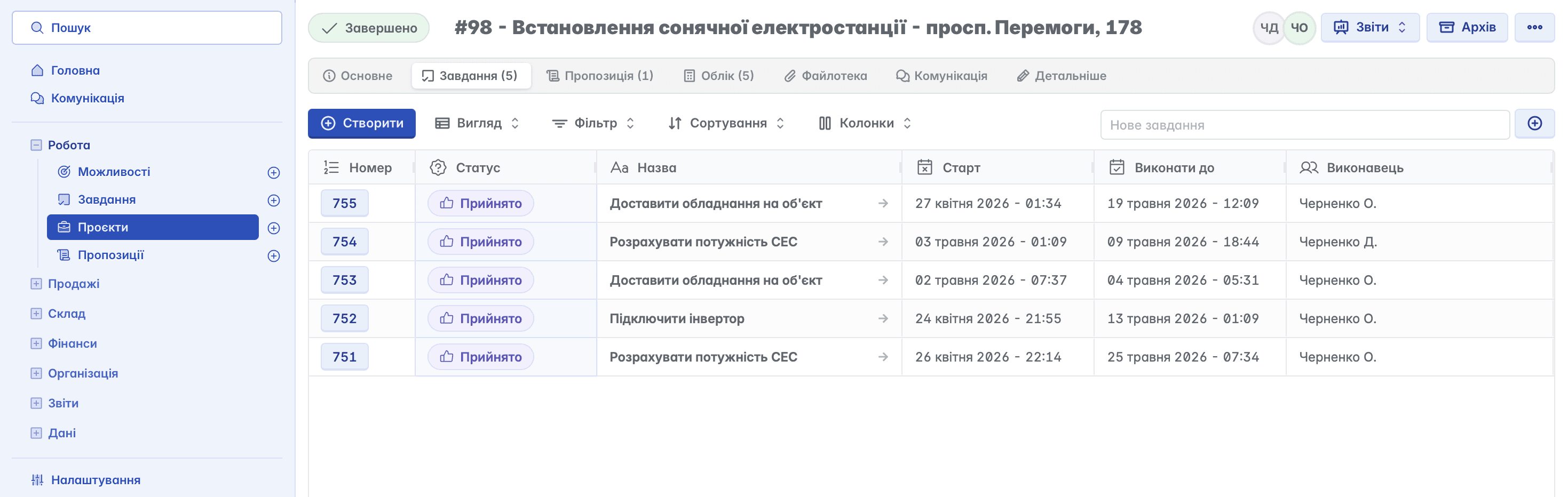
This helps to avoid situations where one employee "pulls" most of the project and others remain less involved.
What changes after implementing a systematic approach
When a team starts working in Keruj™, workload becomes manageable.
An understanding appears:
who is busy with what, how many tasks are in progress, and where risks arise.
This allows to:
avoid overloading individual employees
distribute work evenly
respond to delays in a timely manner
increase the overall efficiency of the team
Workload stops being an experienced problem and becomes an indicator that can be managed.
Uneven workload is one of the main causes of operational chaos in a team. It leads to burnout, delays, and a loss of efficiency.
Keruj™ helps solve this problem not by tightening control, but through process transparency!
When all tasks, deadlines, and assignees are recorded in the system, the manager sees the real picture and can make informed decisions.
As a result, the team works evenly, predictably, and without overloads.


