Implementation
The manager's role in a systemic business: less manual control - more results
In many companies, the manager gradually becomes the center of all processes. Approvals, checks, clarifications, payment control, task control, communication with clients, and solving daily minor issues all go through them. Initially, this seems normal: the owner or manager wants to keep everything under control to avoid mistakes and ensure results. But as the business grows, this model begins to work against the company itself.
When all decisions depend on one person, the team slows down. Employees wait for confirmation, the manager constantly switches between tasks, and instead of developing the business, they are busy with operational routine. This results in overload, chaos in communication, and a feeling that without constant intervention, work will simply stop.
That is why a systemic business is built not around constant manual control, but around transparent processes, responsibility, and a clear organization of work. In such a model, the manager does not control every step manually, but sees the overall picture, quickly receives the necessary information, and influences the result through the management system.
Why manual control stops working
In the early stages of a business, manual control is often a natural process. The team is small, there are few tasks, and most decisions are made quickly in personal messages or verbally. But as the company grows, the number of clients, projects, documents, and employees increases. What used to work starts to cause delays.
The manager constantly checks task statuses, clarifies deadlines, reminds about bill payments, monitors inventory, checks messages in various chats, and simultaneously tries to develop the company. The workday turns into a continuous flow of minor issues.
The problem is not just the heavy workload. Manual control makes the business dependent on a specific person. If the manager is absent, processes start to slow down, and the team does not always understand how to act independently. Some information is kept in personal messages, some in spreadsheets, and some simply in the memory of employees.
In such conditions, it is difficult to quickly assess the real state of the business. Data may be outdated, leads are lost, and important decisions are made based on incomplete information. Instead of systemic management, the company starts working in a constant "firefighting" mode.
Systemic business is about transparency of processes
Systemic business does not mean complex bureaucracy or an excessive number of rules. Its foundation is clear processes and access to up-to-date information.
When work is organized systemically, the manager does not need to clarify every day who is doing what, whether a bill is paid, or what stage a project is at. All information is recorded in a single space, and the team works according to clear rules.
In such a model, tasks have assignees and deadlines, documents are stored centrally, and communication is tied to specific clients, projects, or orders. This allows for quickly getting the historical context without long searches in messengers or spreadsheets.
The manager sees not individual fragments of work, but the overall picture of the business. Which tasks are overdue, which projects bring the most profit, where delays occur, who is overloaded with work, and where processes are running effectively. This makes it possible to make decisions not intuitively, but based on real data.
Control without constant intervention
One of the main mistakes in management is the belief that effective control is only possible through constant intervention in the team's work. In fact, excessive control often yields the opposite result.
When employees are constantly waiting for approval or clarification from the manager, the speed of work drops. People stop taking responsibility for decisions because they get used to the fact that the final word always belongs to the manager.
In a systemic business, control works differently. The manager does not manually check every action, but creates an environment in which processes are transparent and predictable.
For example, if tasks are managed in a system, the manager does not need to ask every employee for their status separately. If all documents are linked to each other, one can quickly see the history of work with a client, payments, or supply. If financial indicators are updated automatically, there is no need to gather information manually from different sources.
This approach does not reduce control. On the contrary, it makes it more accurate and faster. The manager sees the real situation in the company and can react to problems in time, without wasting time on micromanagement.
The role of the manager is changing
In a systemic business, the manager stops being the person who constantly resolves minor operational issues. Their role gradually shifts towards managing processes, people, and company development.
Instead of manual task allocation, the manager defines the rules of the team's work. Instead of endless checks, they analyze indicators and make strategic decisions. Instead of constantly controlling every employee, they form a system of responsibility.
This does not mean a loss of control over the business. On the contrary, the manager gets more time for what truly affects the company's development: scaling, improving processes, working with clients, new directions, and financial planning.
The team also starts working differently. When processes are clear and information is accessible, employees make decisions faster and better understand their responsibility. This reduces errors and dependence on constant clarifications.
Why systemization directly affects the result
Many companies measure performance solely by the volume of work completed. But a large number of tasks does not always mean a good result. If the team operates in constant chaos, part of the time is spent not on real work, but on searching for information, clarifying details, and fixing mistakes.
A systemic approach helps eliminate these losses.
When processes are transparent, the team spends less time on communication for the sake of communication. When information is stored in a single system, there is no need to constantly double-check or search for the necessary data. When tasks have clear statuses and assignees, it becomes easier to control workload and deadlines.
As a result, the business runs more stably. Fewer tasks are lost, decisions are made faster, and the manager can focus not only on current problems, but also on the future development of the company.
This is especially noticeable in companies where many projects, orders, or clients are handled simultaneously. Without a systemic approach, the workload quickly becomes uncontrollable, and manual management begins to consume too many resources.
The system does not replace the manager - it empowers them
Sometimes automation or systemization of processes is perceived as an attempt to completely remove the manager's involvement from operational work. But the system does not replace management - it helps make it more efficient.
Even the best tools will not work without proper process organization and clear rules. It is the manager who defines the work structure of the company, forms a culture of responsibility, and sets the direction of development.
The only difference is that in a systemic business, the manager spends less time on chaotic manual control and more on managing results.
For example, instead of constant calls and clarifications, you can analyze the actual workload of the team. Instead of manual payment tracking, you can see the up-to-date financial status of the company in the system. Instead of searching for information in chats, you can quickly get the full context of work with a client or project.
This allows you to make decisions faster and with more confidence.
How Keruy™ helps the manager work systemically
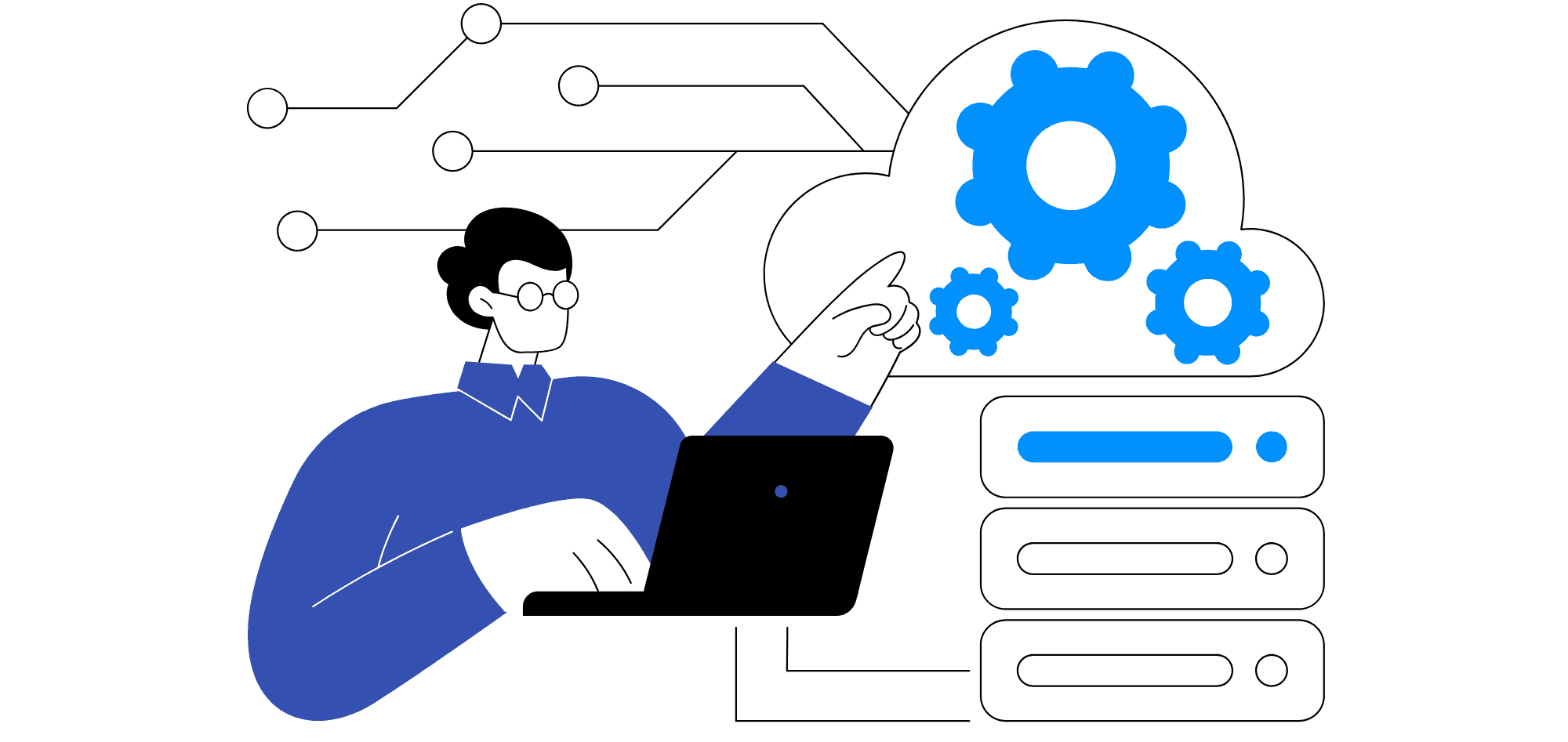
Keruy™ becomes a single workspace that combines tasks, communication, documents, finance, projects, and a client database. Thanks to this, the manager gets access to up-to-date information without having to collect it manually.
In Keruy™, you can see the statuses of tasks and projects, track deadlines, analyze team workload, monitor payment documents, and quickly find the required information about clients or orders.
Importantly, the service helps not only the manager but the entire team. Employees work in a shared environment where all data is interconnected. This reduces errors, improves communication, and makes the company's work more predictable.
When a business runs systemically, the manager stops being the "bottleneck" for the entire team. Processes do not stop due to the absence of a single person, and the company can scale without a constant increase in manual control.
The more a business grows, the harder it is to manage it manually. Constant control of every task, document, or employee gradually begins to consume all the manager's time and slow down the team's work.
A systemic approach allows you to change this model. When processes are transparent, information is centralized, and the team works in a single system, the manager gets the opportunity to control the business without constantly interfering in every detail.
Less manual control does not mean less attention to the business. It means more time for development, strategic decisions, and results that can be scaled.
That is why today, being systemic is becoming not just a convenience, but a necessary condition for stable company growth.