Implementation

Scenario for a trading company: product and payment control
In the retail and wholesale business, the biggest problems usually arise not from a lack of sales, but from a loss of control over processes. Part of the inventory gets lost between the warehouse and the sale, managers forget about unpaid invoices, and the business owner only gets the real picture when problems with cash flow or stock levels emerge.
This is especially noticeable when a company grows: the number of orders, customers, documents, and payments increases. Spreadsheets, messengers, and manual tracking stop working as a unified system. As a result, the business spends more time searching for information, checking stock levels, and monitoring debts than on actually growing sales.
That is why it is crucial for trading companies to have a single workspace where sales, inventory, documents, and finances are interconnected. In Keruy™ (Керуй™), these processes work as a single chain — from the customer's first order to payment and delivery of goods.
Handling Orders in a Single Environment
In most companies, a sale begins with a message in a messenger or a customer call. Then, the manager manually checks stock levels, generates an invoice, forwards the information to the warehouse, and simultaneously monitors payment. Because of this, data is often duplicated or lost.
In Keruy™ (Керуй™), the workflow begins with creating a customer order. This document becomes the foundation for all subsequent processes. It records the customer, items, quantity, prices, and the responsible manager.
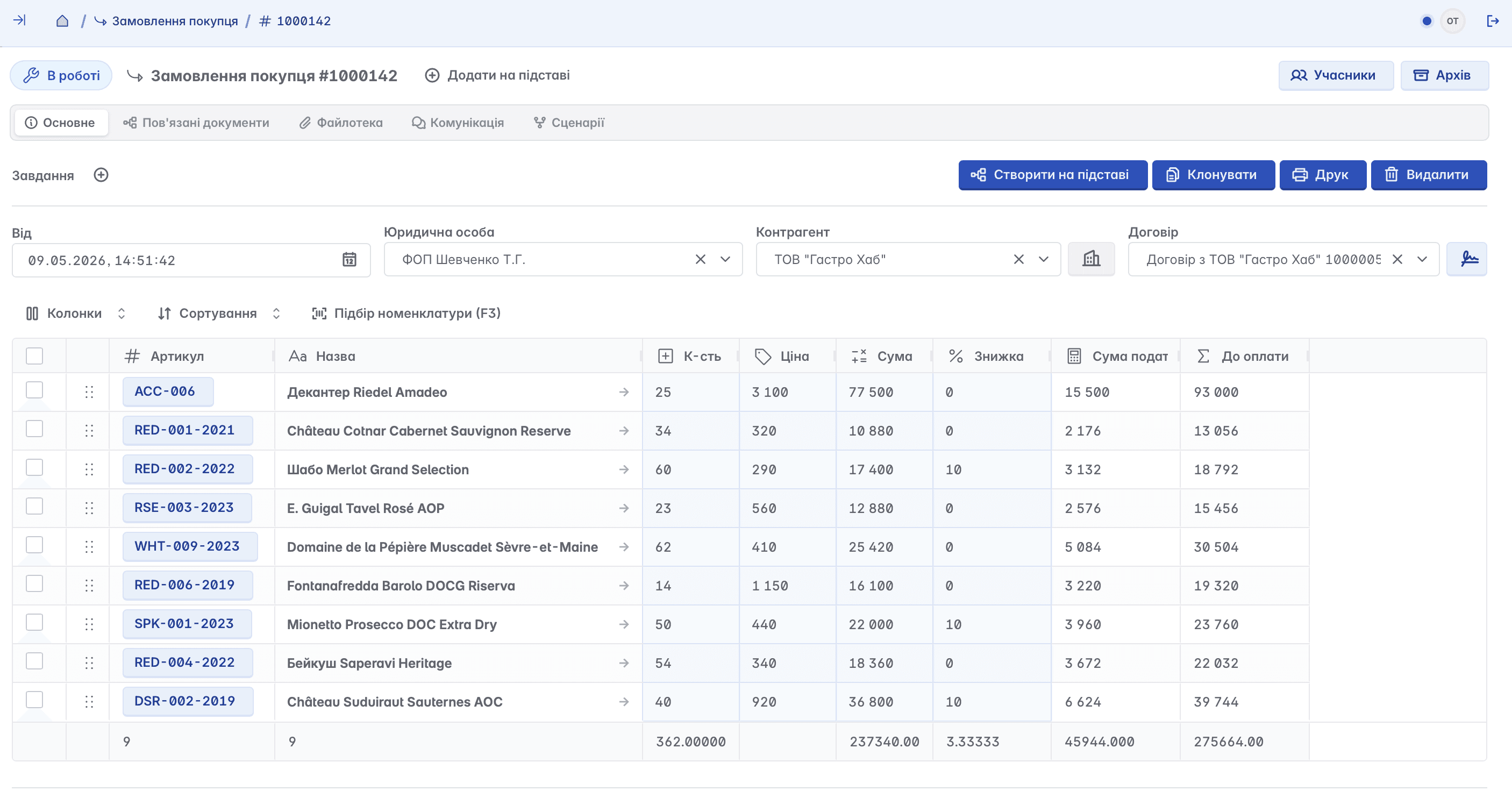
After this, the system allows you to immediately check stock availability. The manager does not need to verify stock levels manually or consult other employees — up-to-date information is handy right while working on the order.
This approach significantly reduces errors. The manager sees the actual quantity of goods, and the company avoids situations where items that are already out of stock are sold to a customer.
Inventory Control
For a trading company, the warehouse is one of the key control centers. If stock levels are inaccurate, the business starts losing money: some goods sit idle, while others run out at the most critical moment.
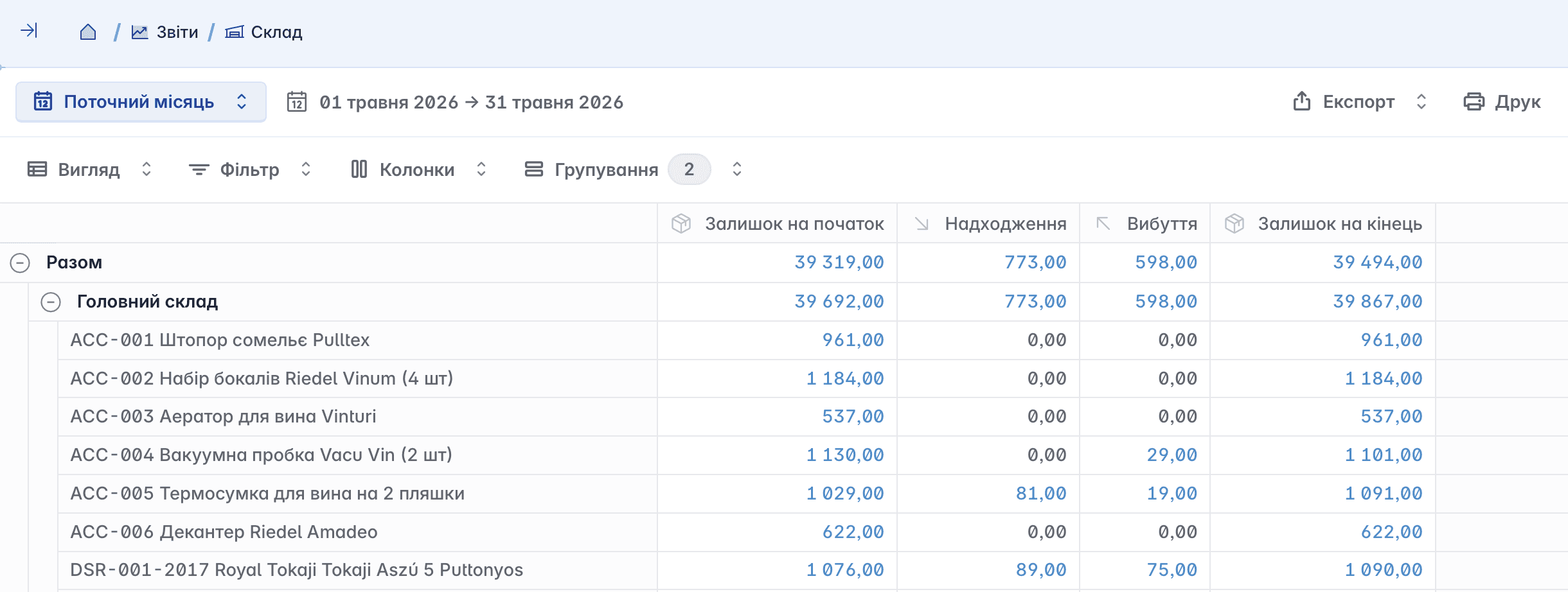
In Keruy™ (Керуй™), all warehouse operations are interconnected. A sale automatically updates stock levels, a return sends the item back to the warehouse, and transfers between warehouses are reflected in the system without manual data duplication.
As a result, the owner always sees the real-time picture of inventory, and the warehouse operates with actual stock levels rather than estimates.
This is particularly important for companies with multiple warehouses or a large product range. In such cases, even a few mistakes a day can create serious chaos in operations.
Generating Invoices Without Data Duplication
One typical issue in sales is the repeated entry of the same information. A manager creates an order, then manually copies the items into an invoice, and after that, transfers the data once more into a sales or warehouse document.
This is not only time-consuming but also creates a risk of mistakes in prices, quantities, or customer details.
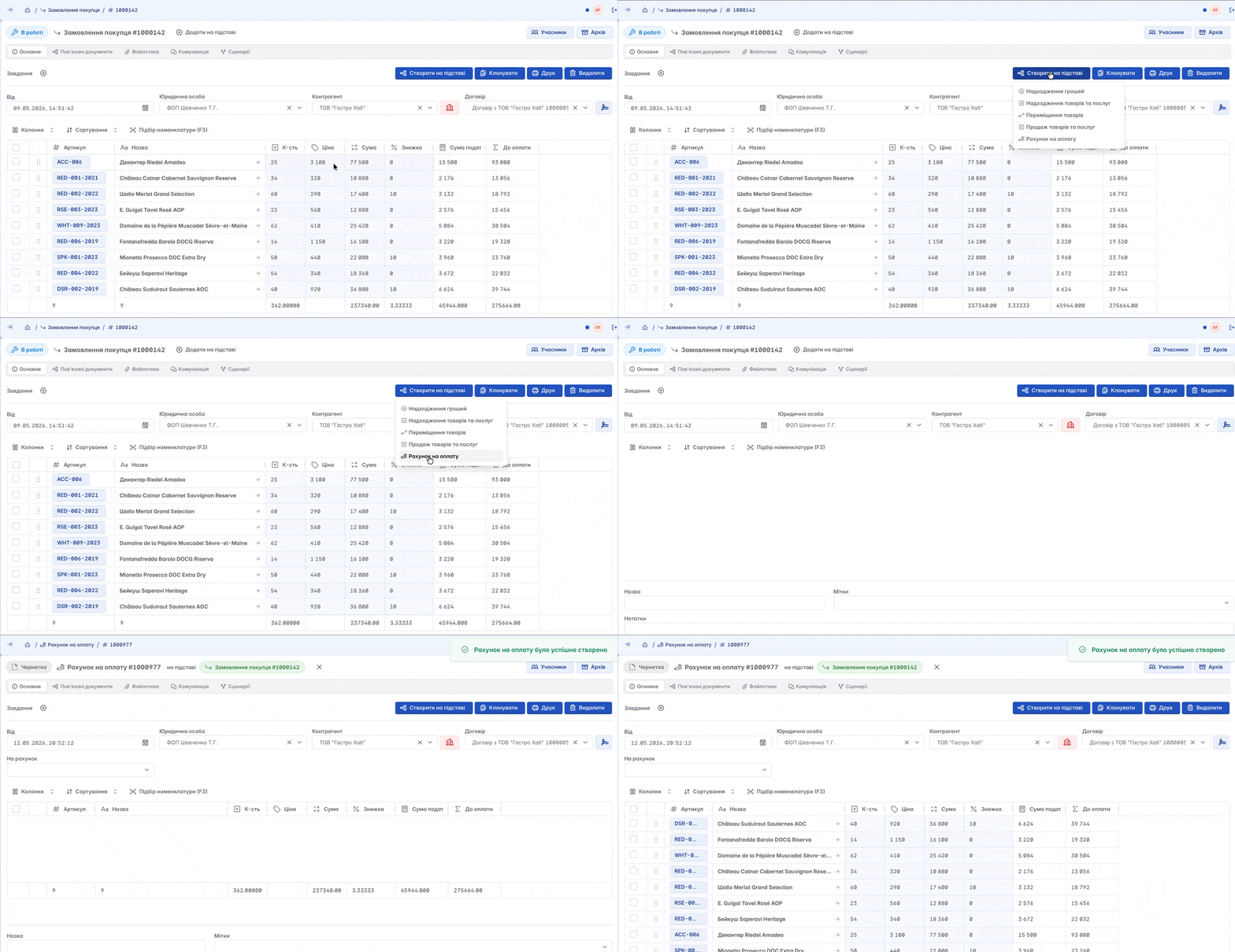
In Keruy™ (Керуй™), an invoice is generated based on the order. The information is automatically transferred to the document, so the manager doesn't need to duplicate the data manually.
This speeds up work and allows for a faster transition to the next stage — payment tracking.
Payment Tracking Without Chaos
When a company works with a large number of clients, payment tracking becomes a separate challenge. This is especially true if some customers use deferred payments.
Without a single system, managers often track payments manually: checking bank statements, logging data in spreadsheets, or searching for history in chat histories. This leads to errors, duplicate reminders, or lost information about outstanding debts.
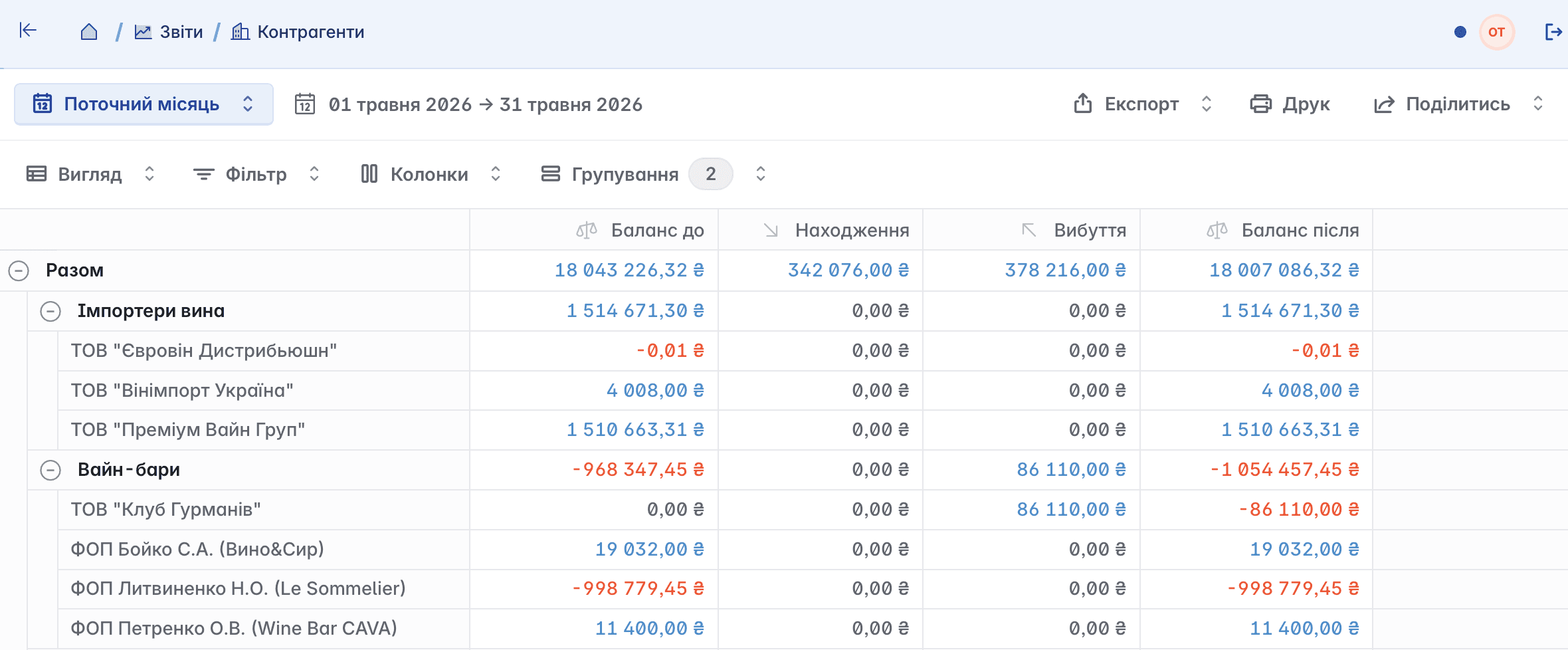
In Keruy™ (Керуй™), every payment is linked to a specific document and client. The service allows you to quickly see which invoices have already been paid and which are still pending.
For the business owner, this means clear financial control without having to constantly request information from managers or accounting.
Shipping and Closing the Sale
Once payment is confirmed, the company can proceed to shipping the goods. In Keruy™ (Керуй™), sales and inventory work together, so after the document is processed, stock levels update automatically.
This helps avoid situations where the warehouse continues to show an item in stock after it has actually been sold.
If a customer returns a product, the return is also recorded in the system and automatically updates stock levels. Thanks to this, the company maintains precise records even with a high volume of daily transactions.
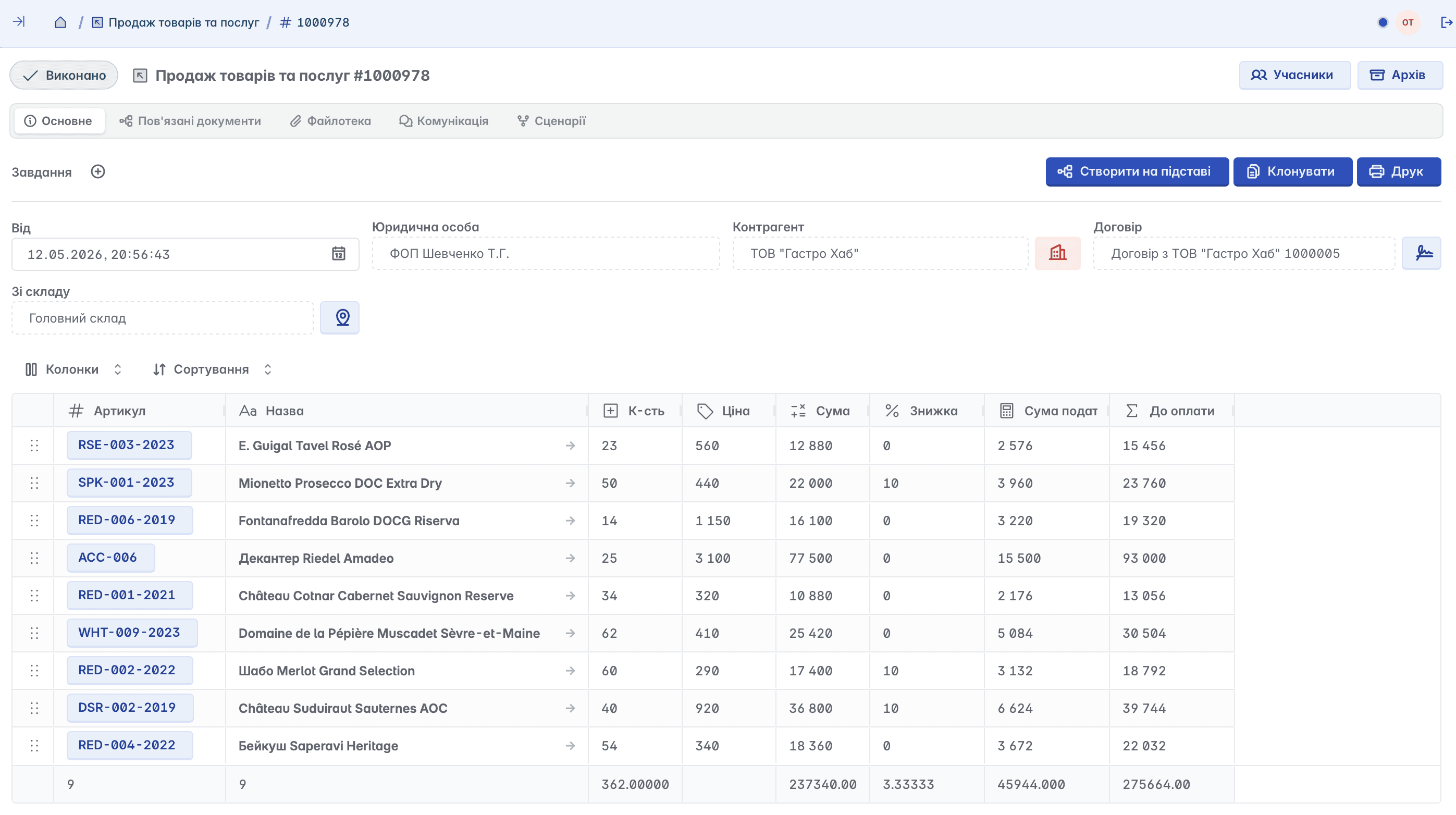
A Single View for the Business Owner
When sales, logistics, and finance operate separately, it is difficult for a business owner to get a true picture of the business status. Part of the information is held by managers, part is in spreadsheets, and part is in accounting.
In Keruy™ (Керуй™), all processes are unified, allowing the owner to control everything in one place:
sales and orders
stock levels
customer payments
debts and settlements
company cash flow
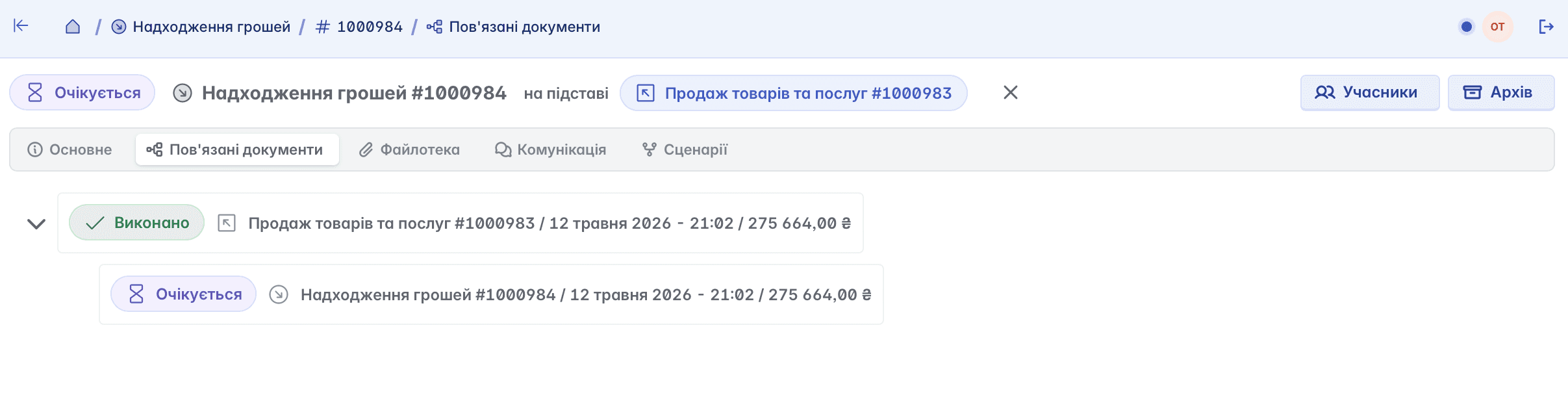
This allows for faster decision-making and helps identify issues before they start impacting business operations.
For a trading company, inventory and payment tracking are not separate processes but parts of a unified system. If there is no connection between the warehouse, sales, and finances, the business begins to lose time, money, and control over team performance.
Keruy™ (Керуй™) helps combine all workflow stages in one environment: from order creation to payment tracking and warehouse stock levels. As a result, the company operates faster, more transparently, and scales with ease.