Implementation

How CRM helps prepare a business for scaling
Most companies start working quite simply: clients are managed in spreadsheets, tasks are discussed in messengers, documents are stored on employees' computers, and finances are in various files and bank statements. At the start, this seems convenient, since the team is small and all processes are kept "in mind."
But when the business starts to grow, such a working model quickly stops working. More clients appear, more projects, more employees, and more operational processes. Information is scattered among different tools, communication is lost, and it becomes more difficult for the manager to understand the real state of affairs in the company.
It is at this stage that many businesses begin to think about implementing a CRM system. And it is not just about convenience. In fact, CRM is one of the key tools that allows a company to prepare for scaling.
Why scaling without a management system becomes a problem
When a business grows, not only the number of clients increases, but also the complexity of internal processes. What worked for a team of five often stops working for a team of twenty.
Typical problems arise:
it is difficult to track project and task statuses
some agreements are lost in correspondence
different employees handle clients differently
financial information is stored in several systems
the manager spends a lot of time on manual coordination
As a result, the company spends more and more time on operational details and less and less on development.
A CRM system allows you to structure these processes and create a unified working environment for the entire team.
A single system for working with clients and projects
One of the main advantages of CRM is the centralization of information. All data about clients, deals, documents, tasks, and communication are stored in a unified environment.
In Keruj, a company gets a single space where the following are interconnected:
counterparties
projects and tasks
commercial proposals
documents
finances
internal communication
This means that any employee can quickly see the complete picture of working with a client: interaction history, open tasks, associated documents, and financial transactions.

When a business scales, this structure allows avoiding chaos and information loss.
Transparent business processes
Another important condition for scaling is clear and repeatable processes.
When each manager works "their own way," the business becomes dependent on specific people. If an employee leaves the company, part of the knowledge about clients and workflows often disappears with them.
CRM helps formalize the work. Projects, tasks, deal stages, and work scenarios become part of the working environment, not personal habits of employees.
In Keruj, this is implemented through working with projects, tasks, and the structure of interaction within the company. Each team member sees their tasks, deadlines, remuneration, and responsible persons. All work is recorded.
Due to this, new employees integrate into workflows faster, and the manager has a clear understanding of what is happening in the company.
Better team coordination
As the company grows, the number of interactions between employees also grows. If communication takes place in different messengers, important details can get lost.
CRM allows moving work communication closer to the processes themselves.
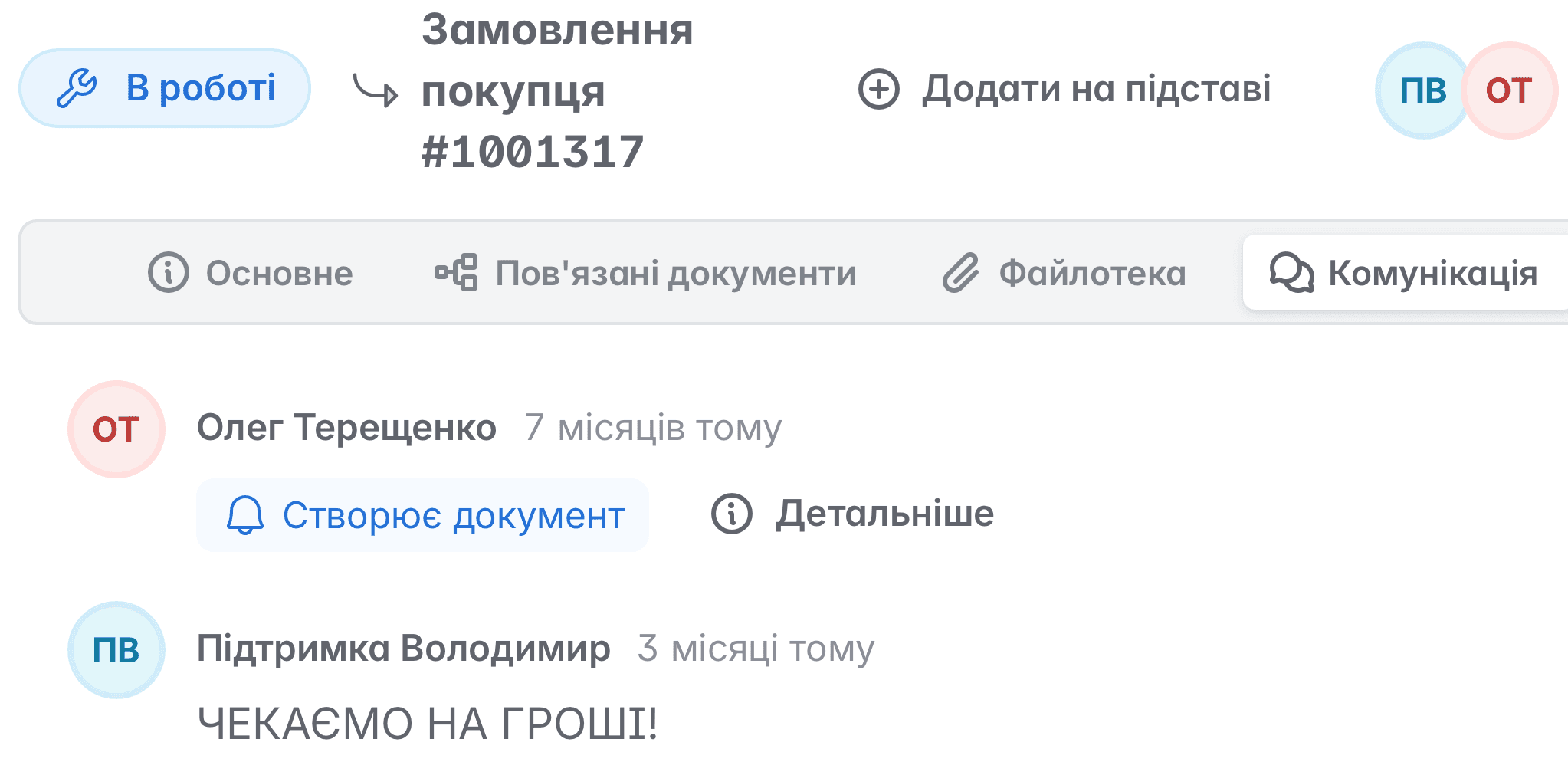
In Keruj, discussions can take place directly in tasks, projects, or documents. This means that all agreements remain attached to specific work, rather than scattered across different chats.
This approach significantly simplifies team coordination. Each participant sees the current status of tasks, understands their role in the process, and can quickly find all necessary information.
Financial management during growth
Scaling is always associated with an increase in financial transactions: more invoices, payments, expenses, and projects.
If financial information is kept in several spreadsheets or different services, it becomes difficult for the manager to get a complete picture of cash flow.
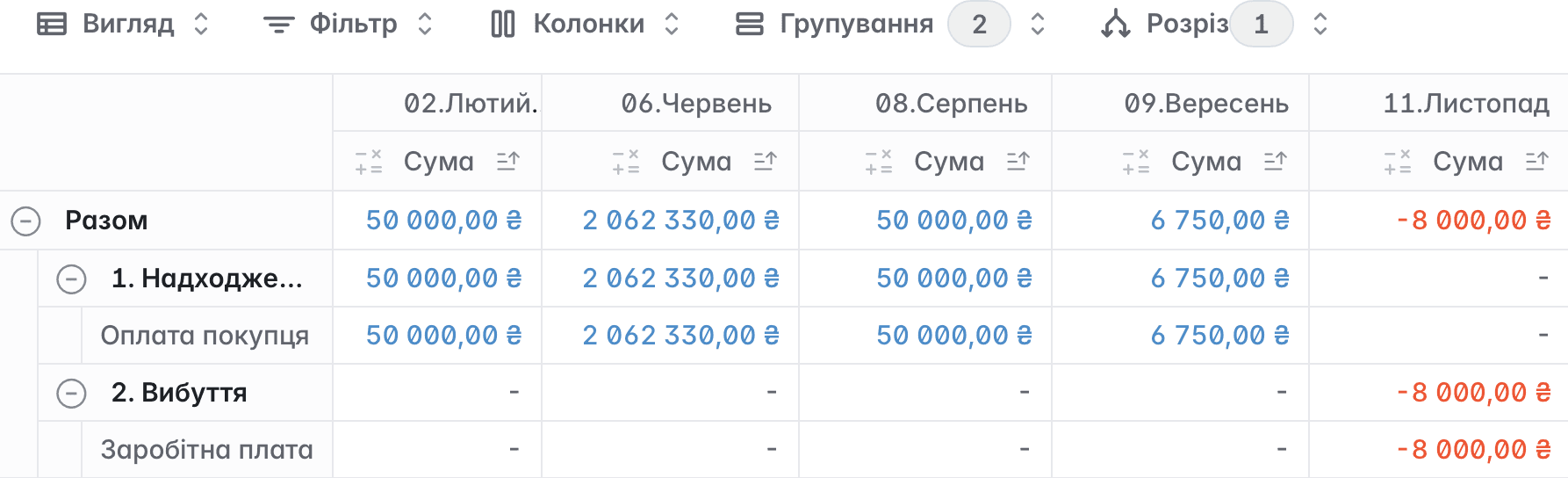
In Keruj, financial transactions are linked to projects, documents, and counterparties. This allows seeing not only individual payments but also the overall financial picture of the company's performance.
This approach helps to better understand which business directions are the most effective, which projects bring the most revenue, and how the financial state of the company changes as it grows.
Readiness for growth
Scaling is not just about increasing the number of clients or employees. Above all, it is the ability of a business to operate stably as the load increases.
A CRM system builds the foundation for such development. It helps structure information, standardize processes, and unite the team's work in a single environment.
As a result, the company gets not just a tool for managing clients, but a full-fledged operational management system.
That is why many businesses implement a CRM even before active scaling — to prepare processes and avoid chaos in the future.
Keruj helps organize work with clients, projects, documents, finances, and communication in a single environment. This allows the company to grow without losing manageability and maintain process transparency even as the team grows.
Try the free demo of Keruj and see how CRM can help prepare your business for scaling.


