Finance

How to bring all financial transactions into a single picture
In many companies, finances exist in pieces. Payments are in the bank, invoices in Excel, acts in documents, and agreements in chats. It seems that all the information is there, but when you need to quickly understand the actual state of affairs, the search, clarification, and manual reconciliation begin.
As a result, the manager does not see the full picture, but only fragments. And this affects decisions: it is difficult to plan expenses, monitor customer payments, or understand where exactly delays occur.
Keruj solves this problem differently. Here, financial transactions are not scattered across different tools, but connected to each other in a single logic. And this is precisely what allows you to see the complete picture in real time.
Why finances "fall apart"
Even in structured businesses, finances often lose their integrity. The reason is simple: each step of the process lives separately.
A billing manager issues an invoice, an accountant records the payment, a manager looks at the report, and part of the information remains in correspondence or is not recorded at all. The data seems to exist, but it is not connected.
Because of this, typical situations arise:
it is unclear which invoices have already been paid
it is difficult to track actual cash flow
time has to be spent on reconciliations between different sources
there is no confidence in the numbers
The problem is not with accounting itself, but with the lack of a single environment.
How it works in Keruj
In Keruj, finances do not exist separately from processes. Each transaction is tied to a specific action: a sale, a project, or a client.
For example, a payment invoice is not just created as a file. It is part of working with the client. When the client pays, this is immediately reflected in the corresponding financial document. And all this data is already interconnected.
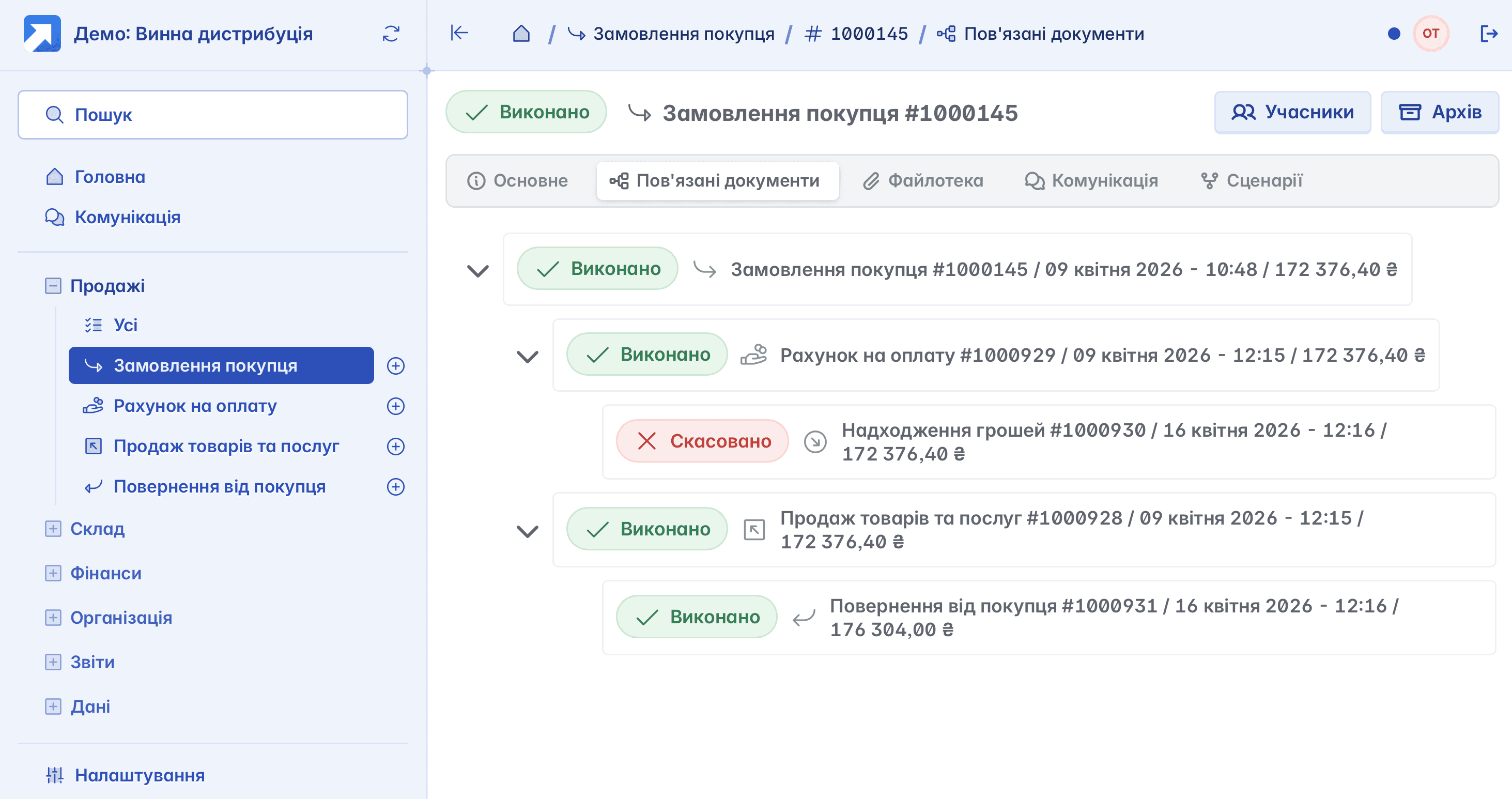
This means you do not have to reconcile information manually. It is already reconciled at the system level.
From document to cash flow
One of the key features of Keruj is the interaction between documents. You are not working with isolated records, but with a logical chain of actions.
Everything begins with working with the client: a proposal or an agreement is created, then an invoice, followed by payment, dispatch of goods, etc. Each of these stages already has a financial component. And it is not duplicated, but continued. This allows you to open a document at any moment and see its financial status: paid, partially paid, or not yet.
In this way, financial information is not entered repeatedly and is not lost between stages.
Transparent cash flow in real time
When all transactions are recorded in a single environment, the main thing appears - transparency.
The manager or responsible employee can see the actual cash flow at any point: what has already been received, what is expected, and which expenses are planned or already processed.
This is not a report generated once a month. It is a live picture that updates along with the team's actions.
And this is precisely what makes it possible to react quickly: not waiting for problems but seeing them in advance.
Payment control without extra steps
One of the most common tasks is monitoring payments from clients. In the traditional approach, this means separate tables, reminders, or constant cross-checks.
In Keruj, this process is much simpler. Because invoices and payments are connected, the status is visible immediately. There is no need to reconcile data or clarify information separately.
If a payment is processed, it is immediately reflected in the reports. If not, you see it without any extra actions.
This reduces the workload on the team and eliminates unnecessary communication.
A single picture of the company
When all financial transactions are in a single system, a holistic view of the business is formed.
You see the overall situation, not individual transactions:
how much money enters the company
what expenses are already there or planned
which areas bring in the most revenue
where delays or risks arise
This allows you to make decisions based on real data rather than assumptions.
Finances as part of daily work
In Keruj, financial accounting is not separated from operations. It is integrated into daily processes.
A manager works with a client and immediately generates financial documents
An assignee completes a task and this affects the financial result
An accountant records the receipt of money in the account and this changes the numbers in reports
The manager sees the up-to-date picture
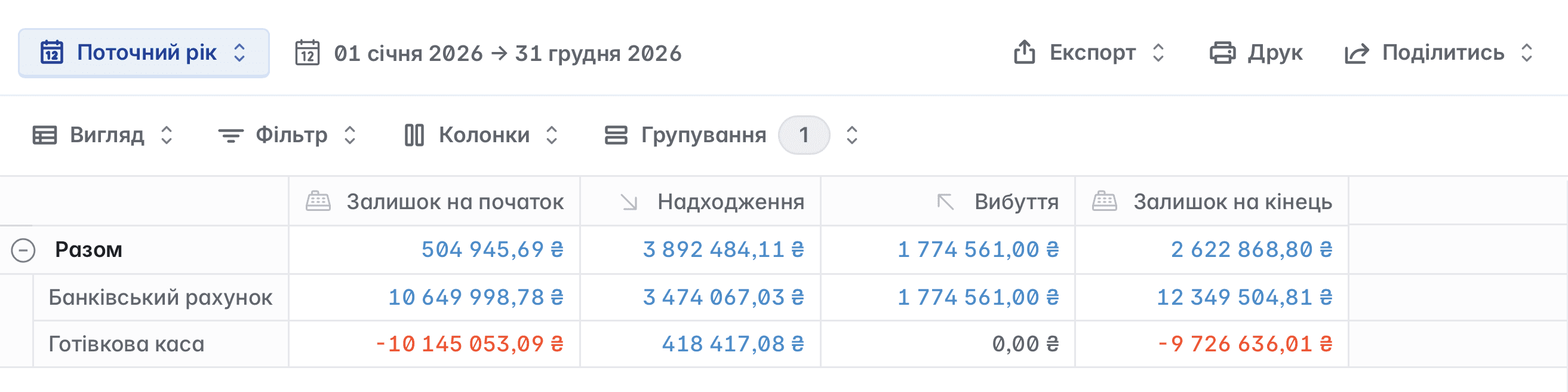
Thanks to this, finance stops being a separate process that needs to be consolidated manually.
It is impossible to bring all financial transactions into a single unified picture if they are split from the start.
Keruj solves this at the logical level: all actions, documents, and payments are interconnected. There is no need to gather data; it is already unified.
As a result, the business gets not just accounting, but a complete understanding of what is happening with the money. No chaos, no extra reconciliations, and no wasted time.