Finance

How to track company cash flow in real time
For any business, money is not only the result of work, but also the basis of stability. A company can have many clients, active sales, and new projects, but at the same time face a lack of funds for current expenses. Most often, the problem is not in profitability, but in the fact that the manager does not see the real cash flow in the company.
This is exactly why cash flow management exists - understanding where funds come from, where they are spent, and what the financial status of the business is at a specific moment in time.
In Keruj, cash flow becomes transparent and understandable. All financial operations are recorded in a single environment, allowing you to see the current state of funds, plan expenditures, and quickly make management decisions.
Why it is important for a business to see real cash flow
In many companies, financial information is scattered among different tools. Part of the data is stored in bank statements, part in spreadsheets, and some in accounting or in the personal notes of the manager. Because of this, it is difficult to quickly understand how much cash the company has now and what payments are expected in the near future.
As a result, typical problems arise:
the company does not notice cash gaps, expenditures do not align with plans, and decisions are made based on incomplete information.
When cash flow is recorded in a single space, the situation changes dramatically. A manager or financial manager can see the actual balance at any moment, understand the structure of expenses, and assess the financial dynamics of the business.
This is exactly the logic implemented in the Keruj financial module.
How cash flow accounting is organized in Keruj
All financial transactions - inflows and outflows - are recorded in the form of documents. Each such transaction has a clear structure: date, amount, transaction type, account or cash desk, responsible person, and counterparty.
Thanks to this, every cash movement becomes part of the overall financial picture of the company.
For example, when a client pays an invoice for completed work, this payment is recorded with an "Inflow of money" document, and the figures are reflected in income. If the company makes a payment to a supplier or covers internal expenses, this is an "Outflow of money" and is reflected in reporting as an expense.
All of these operations form a single flow of financial data, which allows you to track the company's cash flow without additional spreadsheets or manual reconciliation of information.
Importantly, financial data in Keruj can be linked to other system processes. For example, a payment can be linked to a specific project or counterparty. This helps not only to see the amount of expenses but also to understand exactly what the money is spent on and which business directions generate revenue.
Actual financial picture in real time
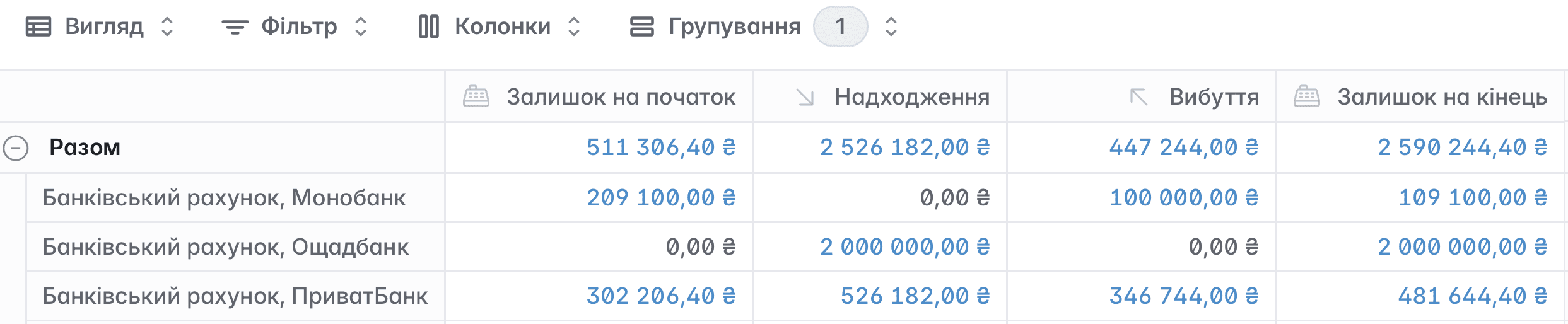
One of the key advantages of Keruj is the ability to see the company's financial situation in real time.
As soon as a new financial transaction is entered into the service, it is immediately reflected in financial indicators. This means that the manager or responsible employee always works with up-to-date data.
This approach allows to quickly answer important questions:
how much money is in the accounts now, what payments were made today, how the company's balance changed in a week or a month.
As a result, finance stops being "after-the-fact reporting." It becomes a living tool for business management.
Expense control and understanding of the financial structure
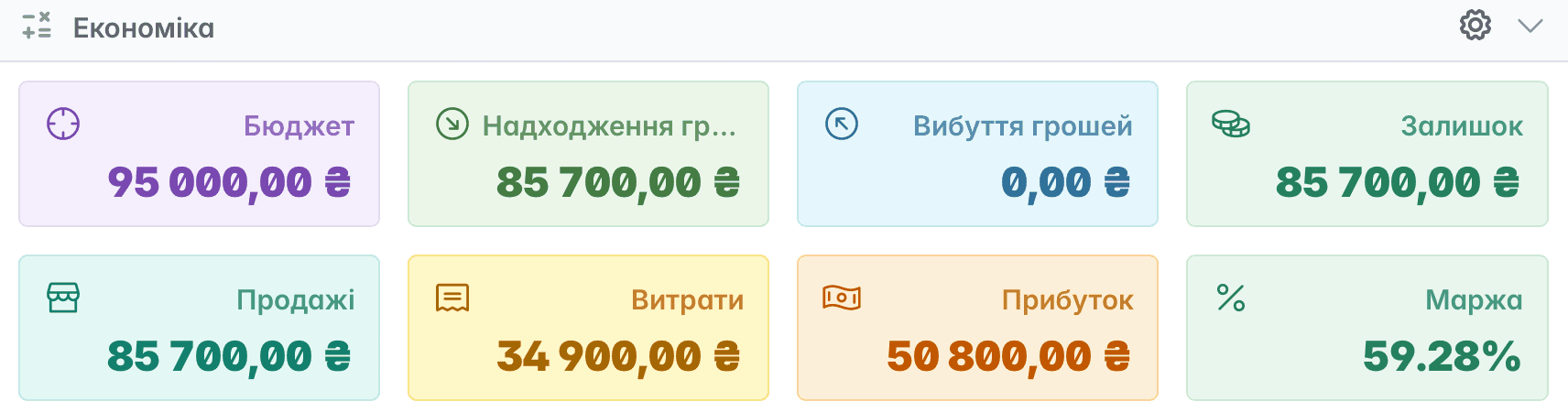
Another important component of cash flow management is understanding the structure of expenses.
When all payments are recorded in a single environment, it becomes much easier to see exactly what the company's funds are spent on. This can be operating expenses, payment of contractors, procurement of materials, marketing, or other items.
Thanks to this, the manager can quickly evaluate which areas require the largest expenditures and whether they correspond to the company's financial plans.
Over time, such analytics helps optimize expenses, identify inefficient processes, and make financial management more predictable.
Cash flow as part of systematic business management
Finance does not exist separately from other processes of the company. It is directly linked to sales, projects, team work, and interaction with clients.
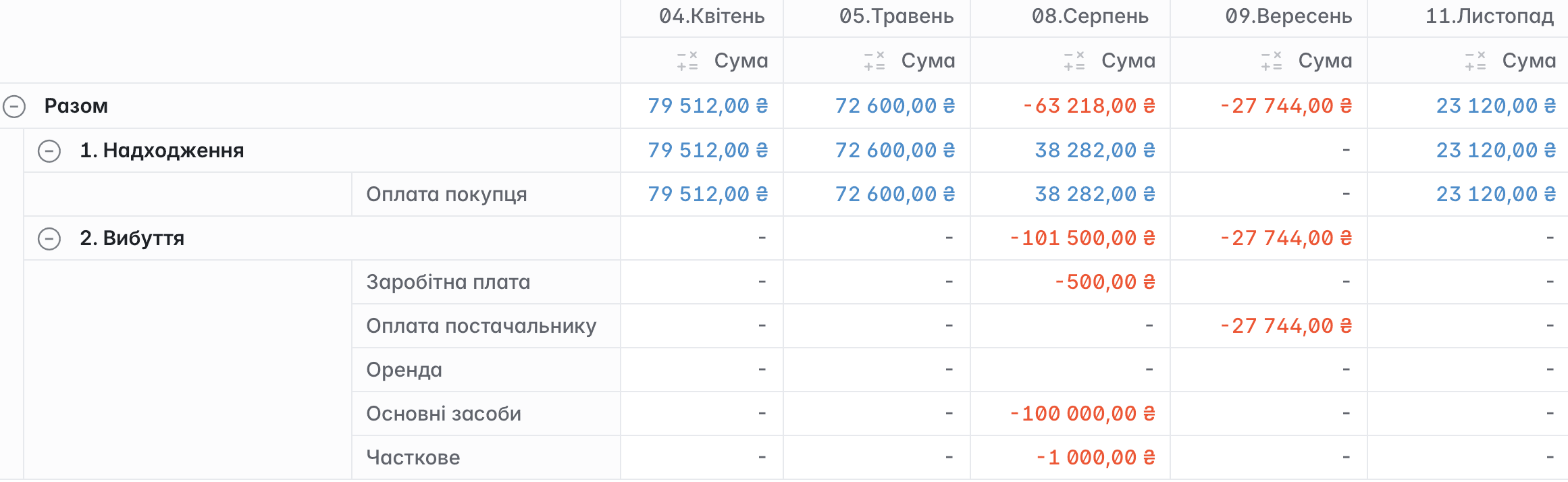
That is why in Keruj, the financial module is part of a single business management system. Payment data can be linked to clients, contracts, or projects, forming a complete picture of the company's activities.
This approach helps the manager see not only figures, but also the causes of financial changes. For example, which projects bring the highest revenue, what costs are associated with specific processes, or how financial results depend on the team's activity.
As a result, company management becomes more systematic and predictable.
Cash flow is one of the key indicators of business health. When cash flow is clear and transparent, a manager can confidently plan the company's development, control expenses, and avoid financial risks.
Keruj allows keeping managerial accounting of finances in a single environment, tracking all inflows and outflows, and seeing the actual financial picture at any moment.
As a result, the company gets not just a record of payments, but a full-fledged tool for financial management and strategic decision-making.


