Task

How the relationships between modules work in Keruj → about the Projects ↔ Finances ↔ Tasks logic
In most companies, work looks pretty much the same: tasks are managed in one tool, finances in another, and projects exist somewhere "on top" in the form of spreadsheets or agreements.
At the start, this does not cause problems. But over time, the main question arises: how are all these actions connected to each other?
Why was the project delayed?
Which specific tasks affected the budget?
Why are there expenses, but the result is not obvious?
To answer these questions, you have to manually gather the picture from different sources.
Keruj is built differently. It is an environment in which the interconnections between modules are not an additional feature, but the basis of the entire working logic.
Not three modules - one environment
Projects, tasks, and finances in Keruj do not exist separately. They are connected to each other from the very beginning.
In fact, the service is built around a simple logic:
the project unites the work, tasks reflect its execution, and finances show the result.
But the key value is not in the modules themselves, but in how they interact with each other.
Project as a gathering point for all processes
In Keruj, a project is not just a folder with tasks. It is a full-fledged working area where everything related to a specific job is collected.
When you open a project, you see not only the task list. You see the progress of execution, the people involved, related actions, and the financial component.
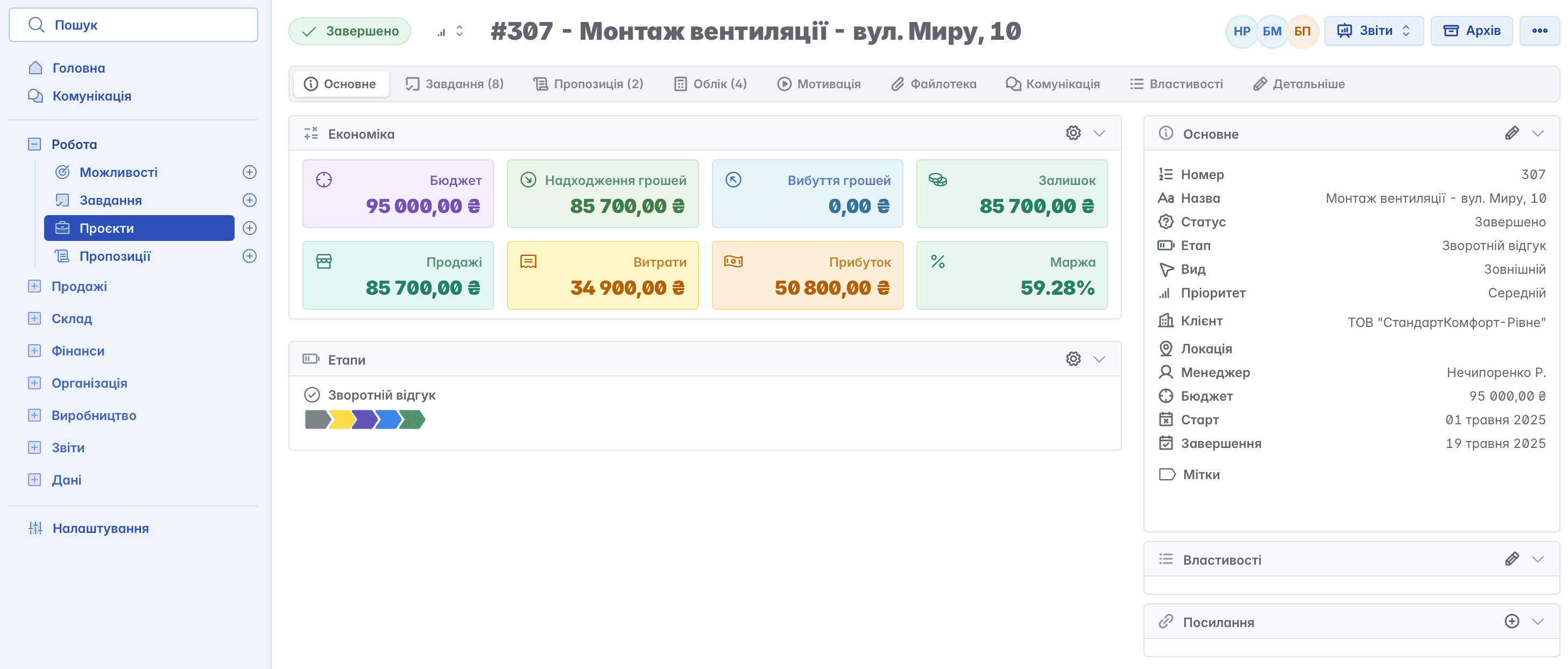
It is here that the main difference becomes noticeable: the project does not require additional data consolidation. All information is already connected on the inside.
Tasks created within a project automatically become part of it. Financial operations linked to it form its budget and result. Ultimately, the project turns into a living model of the process, and not just a list of works.
Tasks as part of the service, not a separate tool
In many services, tasks exist on their own. They can be created, executed, and completed - but they do not always affect the overall picture.
In Keruj, tasks can be part of a project or an isolated element, depending on the user's needs.
When a task is created in a specific context, it is immediately linked to the project, has an assignee, and is part of a larger process. This means that any action in the task is automatically "pulled" into the general working logic.
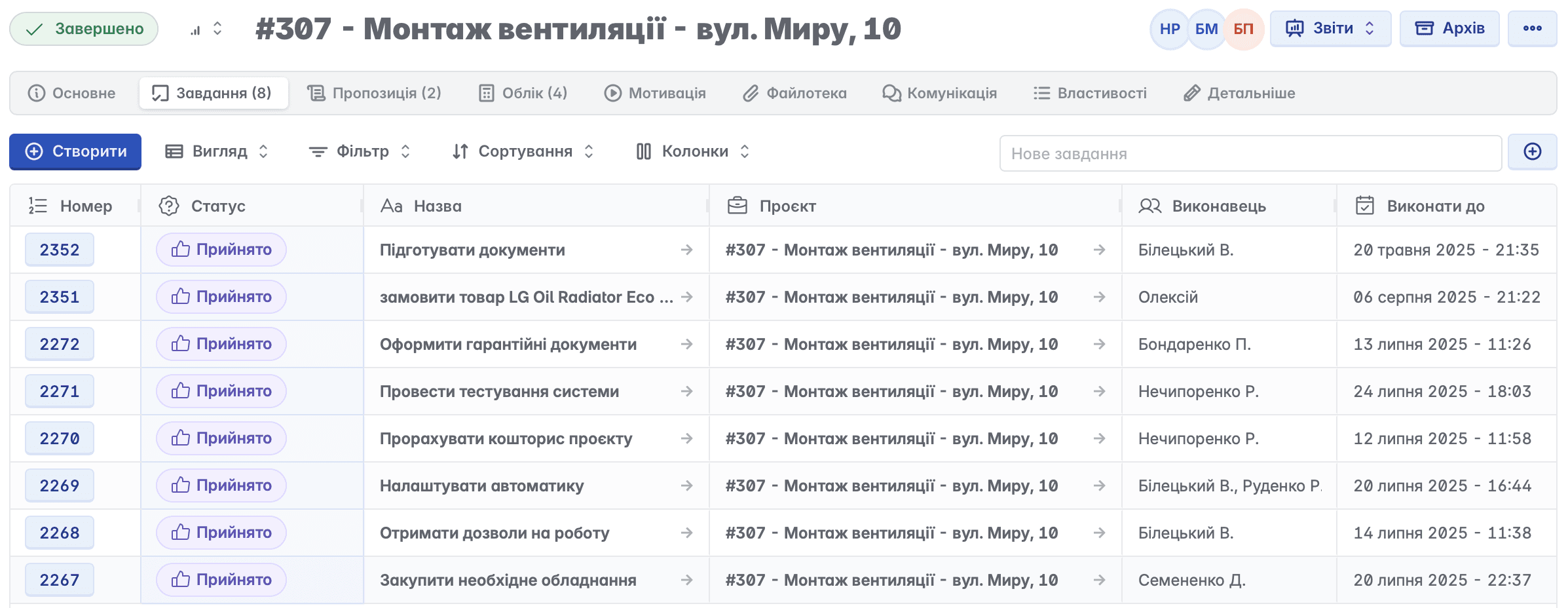
For example, when the team moves through tasks, it is easier to track the progress of the project as a whole. They become an indicator of how the business process is moving.
Finances that are not isolated from work
One of the most common problems in companies is that finances exist separately from operational activities. There are figures, but no understanding of where they come from.
In Keruj, the financial module is integrated into the general environment.
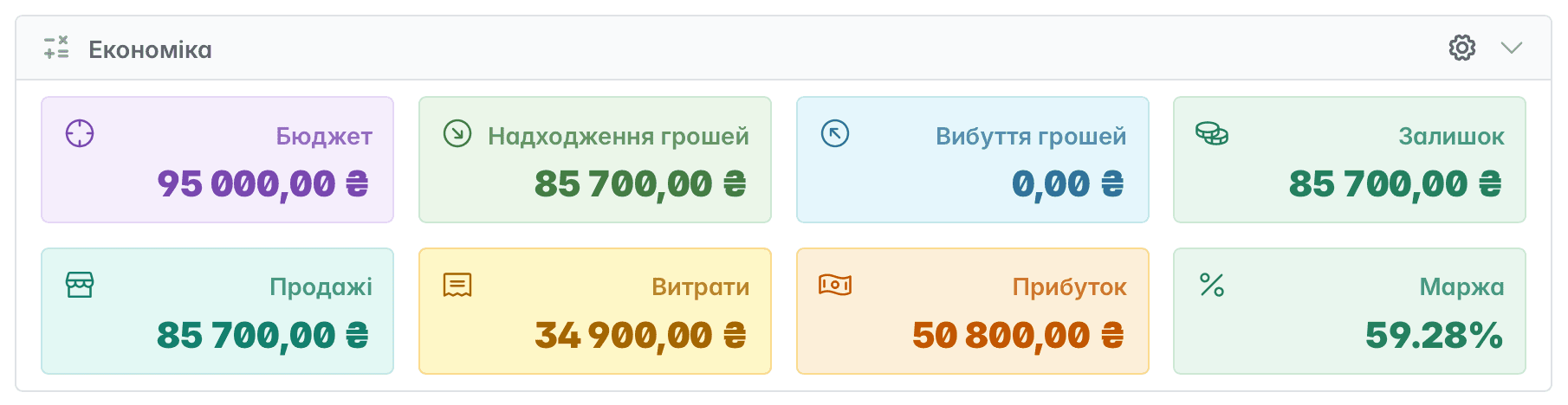
Each financial transaction can be linked to a project. This means that money is not just recorded - it immediately receives context.
When an expense appears, it becomes part of a specific process. When a payment is received, it immediately affects the project's result. In the end, the financial picture is formed not separately, but along with the execution of the work.
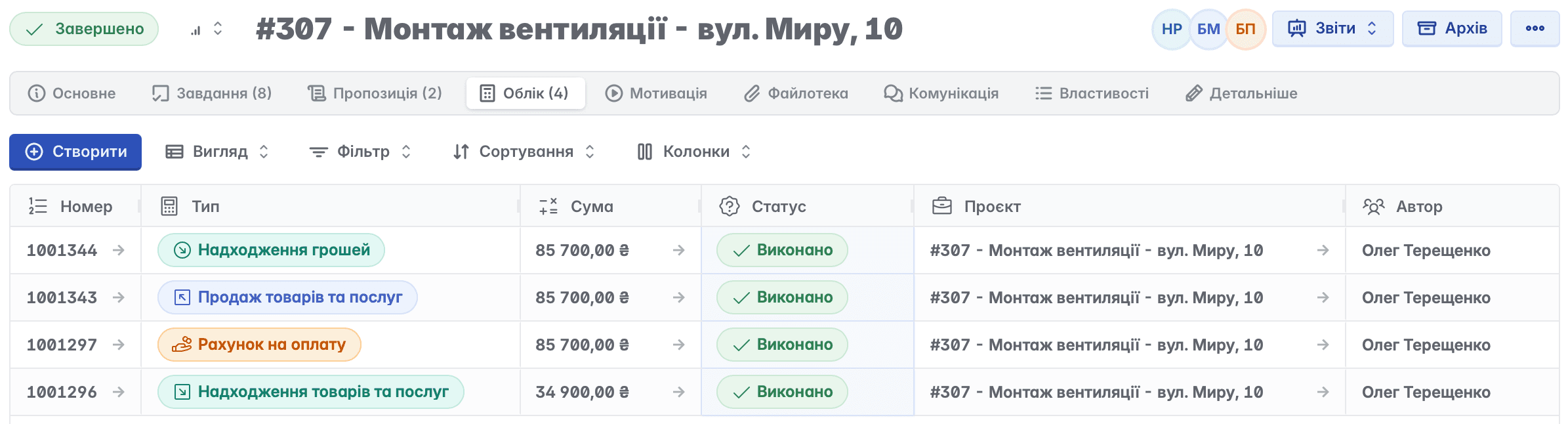
This allows looking at the numbers not in isolation, but as the result of the team's specific actions.
How the connection between modules works in a real-life scenario
Let's imagine a typical process of working with a client.
The company creates a project. Within this project, tasks are formed for the team: preparation, execution of work, communication. All these tasks are immediately linked to the project and reflect the real state of progress.
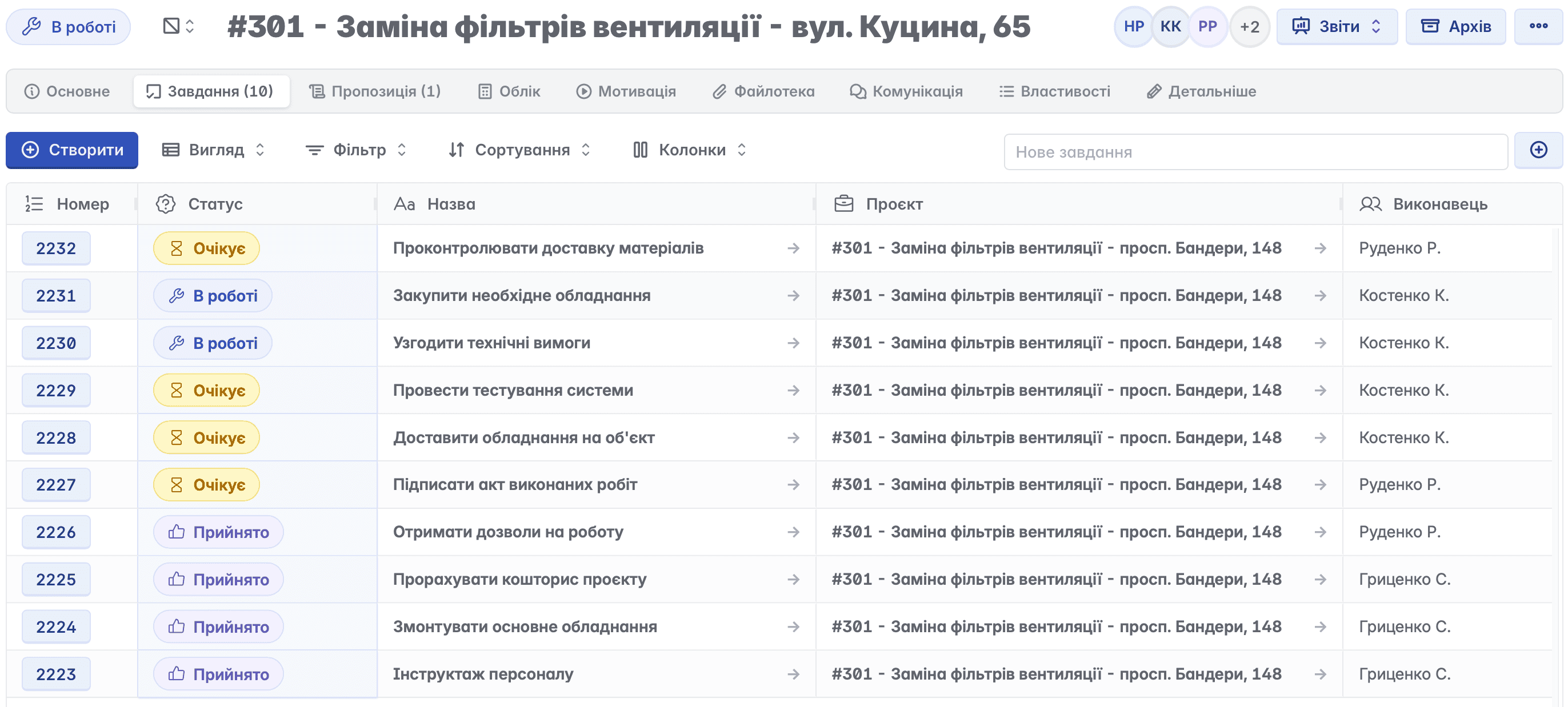
In parallel, financial transactions appear. For example, an advance payment from a client or expenses for the execution of work. These transactions are also linked to the project.
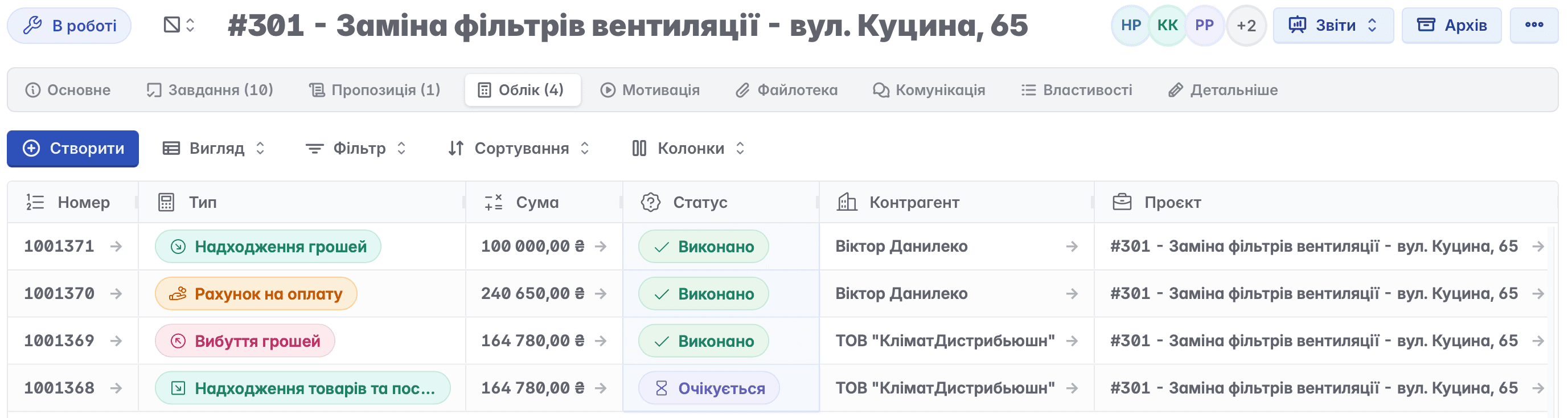
At some point, the manager opens the project and sees the complete picture. Not separate tasks, not separate money, but a single system:
what has already been done
what is still in progress
what expenses have been incurred
what financial result is being formed
And main aspect - all this information appears without any additional actions.
Why this changes the approach to management
When modules work separately, management is built on constant clarifications. You need to ask, check, and consolidate data.
When there is a connection between them, a different logic emerges - the service itself provides the answers.
The manager sees not only the fact of task execution, but their impact on the result. The manager understands how their actions affect the project. The financier sees where the figures are formed form.
This significantly reduces the amount of manual work and allows focusing on decision-making, rather than on gathering information.
A single picture instead of fragments
One of the main advantages of Keruj is integrity. All data in the service is interconnected, and thanks to this, a single picture of the business is formed.
There is no need to switch between tools or compare different sources. All information is already in one environment and already connected.
This is especially important when a business grows. The number of tasks and financial transactions increases, but the service continues to work according to the same logic - without losing structure.
Keruj is not just a set of features. It is an environment where the interconnections between modules form the foundation of work.
Projects unite processes. Tasks reflect their execution. Finances show the result. And all this works together as a single mechanism.
Precisely because of this, the business gets not scattered data, but an understandable, complete, and up-to-date picture of its work.


